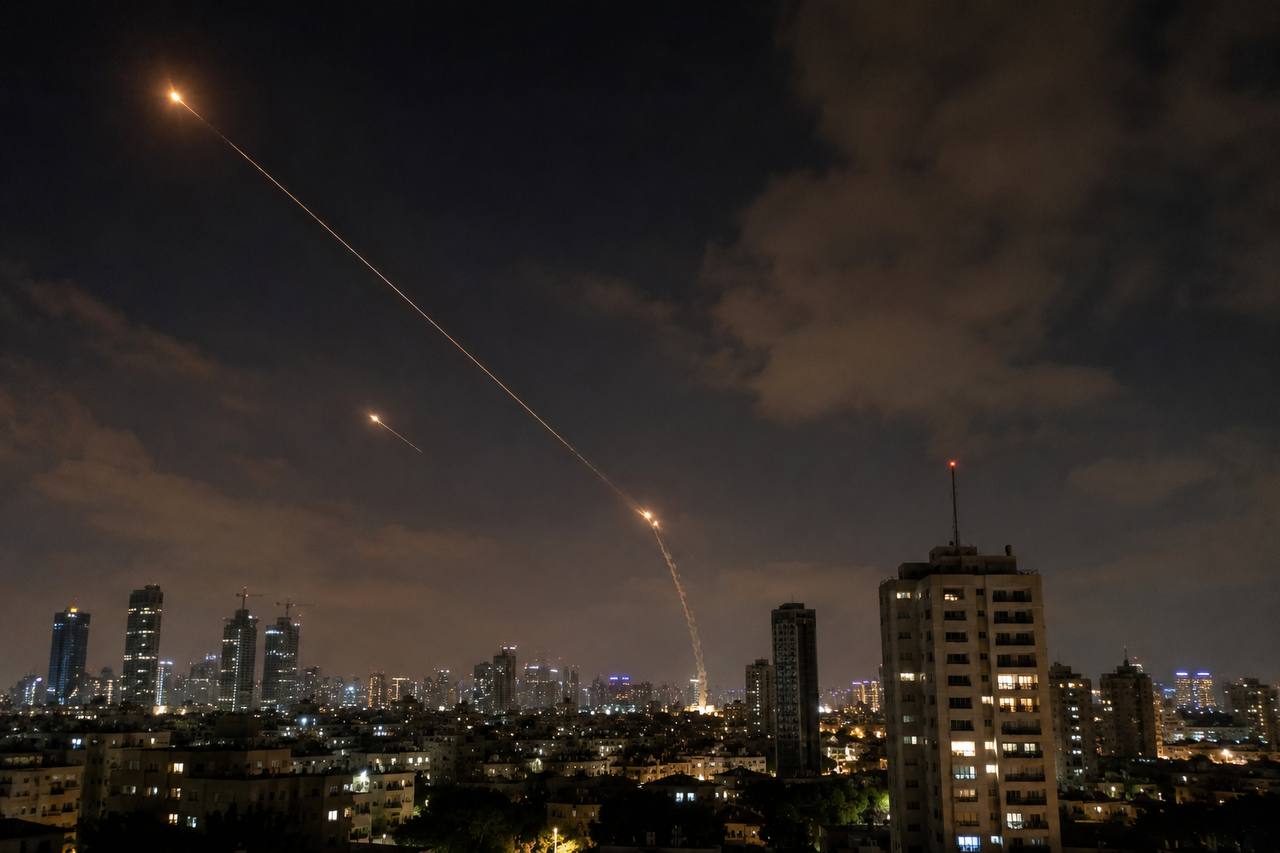

Iran launched around 10 ballistic missiles at northern Israel on 07 June 2026. This action follows an Israeli airstrike in Beirut that killed two people.
The Iranian Revolutionary Guard Corps (IRGC) claimed responsibility for the strikes. They stated the operation was a direct response to Israel’s 07 June 2026 attack on a Hezbollah command centre in Beirut’s southern suburbs. The IRGC’s statement, issued via Sepah News, emphasized a “proportionate and deterrent” response, aiming to re-establish deterrence after perceived Israeli aggression. This marks a significant shift from proxy engagement to direct military action by Tehran.
Missiles, identified as Emad-1 and Qiam-2 variants, were fired from Iran’s Kermanshah Province. The Emad-1, a liquid-fueled missile, has an estimated range of 1,700 km and can carry a 750 kg warhead. The Qiam-2, a solid-propellant missile, offers a shorter range of 800 km but boasts improved maneuverability. They targeted northern Israel, with all missiles either intercepted or striking open areas.
The Israeli Defence Forces (IDF) reported its Iron Dome and David’s Sling air defence systems intercepted all incoming missiles. Iron Dome primarily defends against short-range rockets, while David’s Sling handles medium-to-long-range threats. No missiles impacted their intended targets.
Initial assessments indicate no Israeli military personnel sustained injuries and no radar installations suffered damage, according to an IDF spokesperson. The IDF has initiated an investigation into the penetrations, particularly concerning the performance against the Qiam-2’s terminal maneuverability.
The preceding Israeli airstrike on 07 June 2026 killed two people in Beirut. Their identities as specific Hezbollah commanders Hassan Zayyat and Ali Khair, or their roles in the group’s precision missile program, were not confirmed. Their elimination was a significant blow to Hezbollah’s strategic capabilities.
US State Department Spokesperson Matthew Miller condemned Iran’s actions. He reiterated Washington’s unwavering commitment to Israel’s security, citing the 2016 US-Israel Memorandum of Understanding on security assistance, which provides Israel with ₹31,700 crore ($3.8 billion) annually. Miller called for immediate de-escalation from all parties, emphasizing the risk of broader regional conflict.
This escalation marks the most direct exchange of fire between Iran and Israel since the 2024 Red Sea attacks. That earlier confrontation saw Iranian-backed Houthi forces target international shipping, drawing a limited US-UK response. Unlike the proxy engagements in the Red Sea, this direct missile exchange from Iranian territory represents a significant shift, raising the stakes for both nations and the wider Middle East.
The current missile exchange immediately impacted global markets. Brent crude futures were around $93 per barrel on 07 June 2026, reflecting heightened geopolitical risk in the region, though prices had shown recent volatility and some decline. Gold prices also saw a significant decrease of approximately 3-4%, indicating market volatility.
Regional stability is now under severe threat, with Lebanon, Syria, and Jordan facing increased spillover risks. These include potential refugee flows, heightened cross-border skirmishes, and economic disruption. Diplomatic channels are working to prevent a wider conflict, with the Israeli War Cabinet expected to convene an emergency session on 07 June 2026 to discuss response options, potentially including further retaliatory strikes.
The United Nations Security Council (UNSC) is expected to discuss escalating tensions, though a specific emergency session on 08 June 2026 at 15:00 GMT in response to this strike was not confirmed. UN Secretary-General António Guterres has urged all parties to exercise maximum restraint.
ℹ️ Key Details of the Escalation
- Date of Iranian Strike: 07 June 2026
- Missiles Launched: Around 10 ballistic missiles (Emad-1, Qiam-2)
- Launch Origin: Kermanshah Province, Iran
- Israeli Targets: Northern Israel (missiles intercepted or struck open areas)
- Interception Rate: All missiles intercepted by Iron Dome/David’s Sling
- Israeli Casualties/Damage: No military personnel injured, no radar installations damaged
- Preceding Israeli Strike: 07 June 2026, killed 2 people in Beirut


