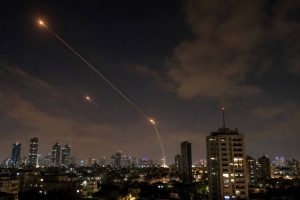
United States forces struck at least 2 targets near the Strait of Hormuz on 28 May 2026 and shot down Iranian drones mid-exchange, with explosions reported close to an Iranian military installation, according to defence officials cited by ABP News.
How It Got Here
The current US-Iran military confrontation, which began in late February 2026 with initial US and Israeli strikes on Iranian military and infrastructure targets, saw a decision President Donald Trump framed as a response to Iran accelerating uranium enrichment toward weapons-grade levels. Iran’s Islamic Revolutionary Guard Corps (IRGC) answered with ballistic missile salvoes at US assets in the region and accelerated drone operations against American naval positions in the Gulf. By mid-May, multiple Iranian military and infrastructure sites had been struck, and the IRGC had fired hundreds of drones and missiles at US and allied targets across the theatre since February 2026.
A diplomatic opening briefly appeared on 20 May, when Omani mediators brokered a preliminary framework: Iran would cap enrichment at 60 percent in exchange for phased sanctions relief and a US halt to further strikes. Both sides acknowledged the outline in back-channel statements. The framework faced significant obstacles, with reports of Washington demanding immediate IAEA access to the Fordow facility, a condition Tehran reportedly rejected as a violation of sovereignty. Drone launches resumed on 23 May amidst this impasse. The 28 May strikes near Hormuz are among several US offensive actions since the recent diplomatic impasse.
The Strait at Stake
The Strait of Hormuz — a 33-kilometre-wide passage between Iran and Oman — carries roughly 20 percent of globally traded oil. Historically, approximately 17 million barrels of crude transited it every single day; however, traffic has been significantly reduced since the conflict began in February 2026. Iran controls the northern coastline and has mined the strait before: in the 1980s Tanker War, Iranian mines damaged 87 vessels and the US Navy conducted Operation Praying Mantis in April 1988, sinking two Iranian frigates to restore passage. The current military tempo already exceeds that crisis in air-strike volume, making an equivalent quick reset less likely.
Saudi Arabia and the UAE, whose crude export terminals depend entirely on Hormuz passage, face immediate revenue exposure. Qatar’s LNG shipments to European and Asian buyers route through the same chokepoint. Brent crude responded within hours of the 28 May reports, with spot prices rising on war-risk premium calculations by tanker insurers.
ℹ️ Casualty and Strike Scorecard — US-Iran Conflict, May 2026
- Iranian military and infrastructure sites struck by US since February 2026: multiple
- Iranian drones and missiles fired at US/allied targets since February 2026: hundreds
- US personnel casualties: not publicly confirmed by Pentagon
- Iranian state media-acknowledged casualties: 4 naval personnel on May 25; other figures not disclosed
- Diplomatic framework attempted: 20 May Oman channel — faced significant impasse by 22 May
- Recent US strike count since diplomatic impasse: multiple rounds including 28 May
What the Drone Exchange Tells Us
The simultaneous nature of the 28 May incident — US aircraft striking ground targets while Iranian drones were already airborne — points to coordinated IRGC pre-positioning rather than a reactive launch. That pattern matches the IRGC’s doctrine of layered retaliation: absorb a strike, release a drone wave already in the air. It raises the operational risk for any ceasefire window, because either side could misread a pre-positioned drone sortie as a fresh escalation.
What Comes Next
The UN Security Council holds emergency consultations on 29 May 2026, with France and the UK expected to table a ceasefire resolution. Iran’s Supreme National Security Council was convening on the evening of 28 May to frame an official response — that statement will set the immediate trajectory. Washington has signalled it will continue strikes if Iranian drone activity persists, and the Pentagon has not confirmed any pause in operational planning.
FAQ
Where exactly did the US strikes hit?
What collapsed the May 2026 ceasefire talks?
Has Iran issued an official statement on the 28 May strikes?