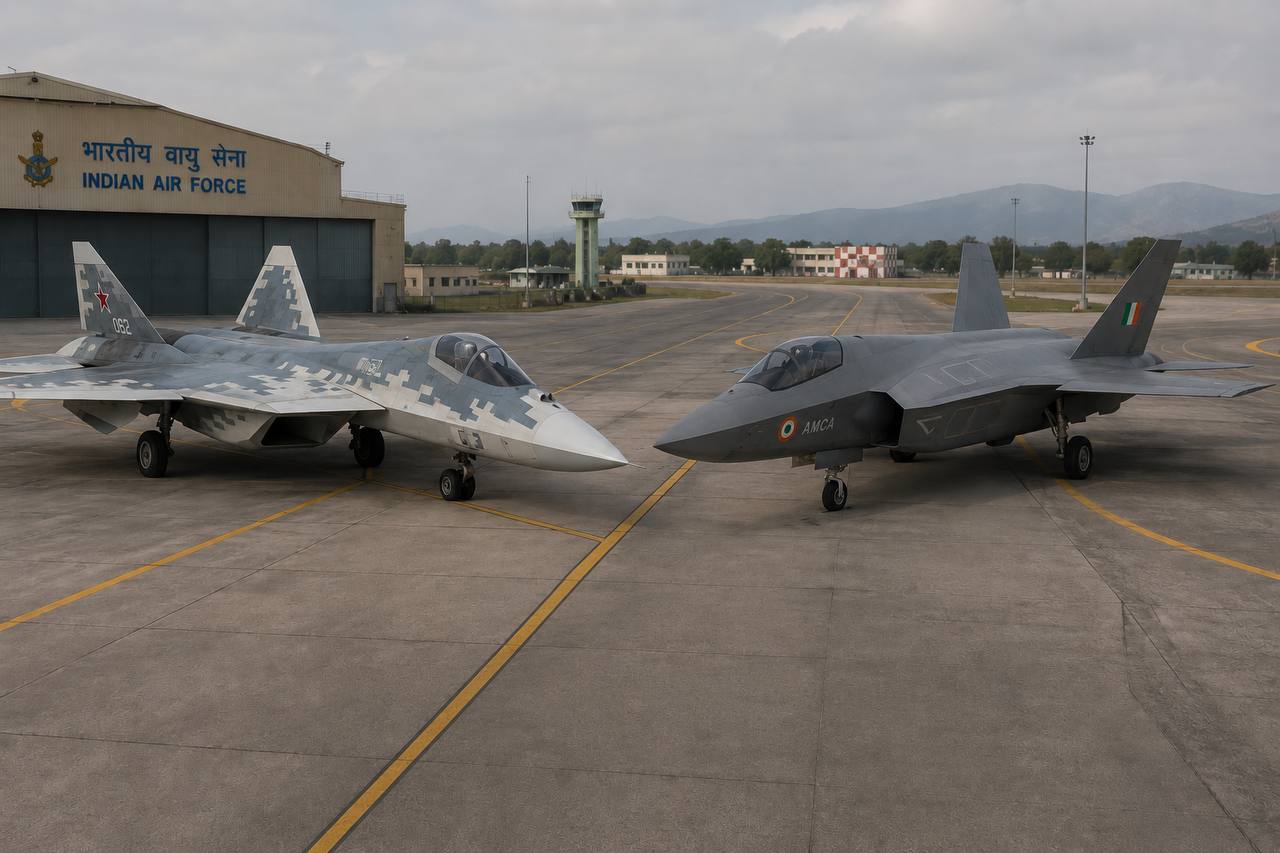

In the grand halls of high-stakes diplomacy at the St. Petersburg International Economic Forum (SPIEF) on June 4, 2026, Russian President Vladimir Putin made a statement that immediately sent ripples through global defence circles. Putin explicitly highlighted the Sukhoi Su-57 as the “best fighter jet in the world” and reaffirmed Moscow’s readiness to collaborate deeply with India on the platform.
This was not just a routine arms pitch. Following months of advanced technical negotiations, Russia has put forward an unprecedented offer to New Delhi: a heavily customized, twin-seat variant of the Su-57, complete with localized manufacturing and unrestricted technology transfer.
Here is a complete breakdown of the proposal, what it means for the Indian Air Force (IAF), and the strategic dilemmas it creates.
Inside the Su-57 Offer: A Customized “Make in India” Stealth Fighter
The current proposal goes far beyond a standard buyer-seller relationship. To entice New Delhi, Moscow has tailored the offer to address past grievances and align with India’s modern defence requirements.
- The “Su-57D” Twin-Seat Variant: Russia is pitching a newly developed dual-seat configuration. While the front pilot focuses on flight control and combat maneuvering, the rear-seat weapon-systems officer manages sensor fusion, electronic warfare, and drone-swarm coordination (Manned-Unmanned Teaming, or MUM-T).
- Unprecedented Source Code Access: A massive sticking point in modern arms sales is software control. Russia is reportedly offering full access to the aircraft’s source code. This would allow India to independently integrate its indigenous weapons—like the BrahMos cruise missile and Astra air-to-air missiles—without seeking Moscow’s permission.
- Local Production and Tech Transfer: The deal proposes establishing production lines at Hindustan Aeronautics Limited (HAL) facilities, aiming for 40 per cent to 60 per cent localization of components, including next-generation engines and active electronically scanned array (AESA) radars.
Strategic Timing: Why Putin Is Pitching the Jet Now
The timing of this proposal is driven by urgent geopolitical realities for both nations.
For Russia, locking in a massive export contract with India secures vital funding for its aerospace sector and preserves its historical dominance in the Indian defence market amid growing competition from France and the United States.
For India, the strategic environment is increasingly hostile. China is rapidly expanding its fleet of Chengdu J-20 stealth fighters, which frequently patrol contested border regions. Furthermore, military alignment between Beijing and Islamabad is tightening, with Pakistan reportedly collaborating on Chinese stealth programs. The IAF currently lacks a fifth-generation fighter to counter these advanced threats.
The FGFA Ghost: A Complicated History of Joint Stealth Programs
This is not the first time New Delhi and Moscow have attempted to build a fifth-generation jet together.
Timeline
- 2010 — India and Russia sign a preliminary $6 billion design contract for the Fifth Generation Fighter Aircraft (FGFA), based on the Su-57 prototype.
- 2018 — New Delhi pulls out of the FGFA program, citing severe developmental delays, rising costs, and dissatisfaction with technology transfer and engine performance.
- January 2026 — The Indian Defence Ministry confirms that talks for the license production of the Su-57 have reached an advanced technical stage.
- June 2026 — At the SPIEF summit, Vladimir Putin publicly champions the Su-57 and confirms Russia’s readiness to customize and supply the jet to India.
The AMCA Dilemma: Indigenous Sovereignty vs. Immediate Defence Needs
The most significant roadblock to the Su-57 deal is India’s own indigenous stealth program: the Advanced Medium Combat Aircraft (AMCA).
Championed by the Defence Research and Development Organisation (DRDO) and HAL, the AMCA is the crown jewel of India’s Atmanirbhar Bharat (Self-Reliant India) initiative. However, the AMCA is not expected to enter operational service until well into the 2030s.
This creates a strategic crossroads for New Delhi:
- The Case for the Su-57: It provides an immediate, “stopgap” solution to counter China’s J-20s. Access to Russian source codes, thrust-vectoring engines, and stealth materials could actually accelerate the AMCA’s development by allowing Indian engineers to study and adapt mature technologies.
- The Case Against: Skeptics fear that committing billions of dollars to a foreign platform will inevitably siphon funds, focus, and engineering resources away from the AMCA, delaying it further. Furthermore, integrating a completely new fighter demands massive investments in fresh training, maintenance infrastructure, and supply chains.
The Verdict: How India Might Navigate the Fifth-Generation Crossroads
As defence analysts evaluate the implications of the SPIEF 2026 announcements, a pragmatic compromise seems most likely. India may opt to acquire a limited number of off-the-shelf Su-57 twin-seaters to bridge its immediate capability gap and gain operational experience in fifth-generation warfare, while fiercely protecting the primary funding pipeline for its indigenous AMCA program.


