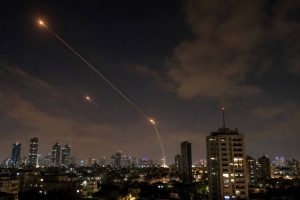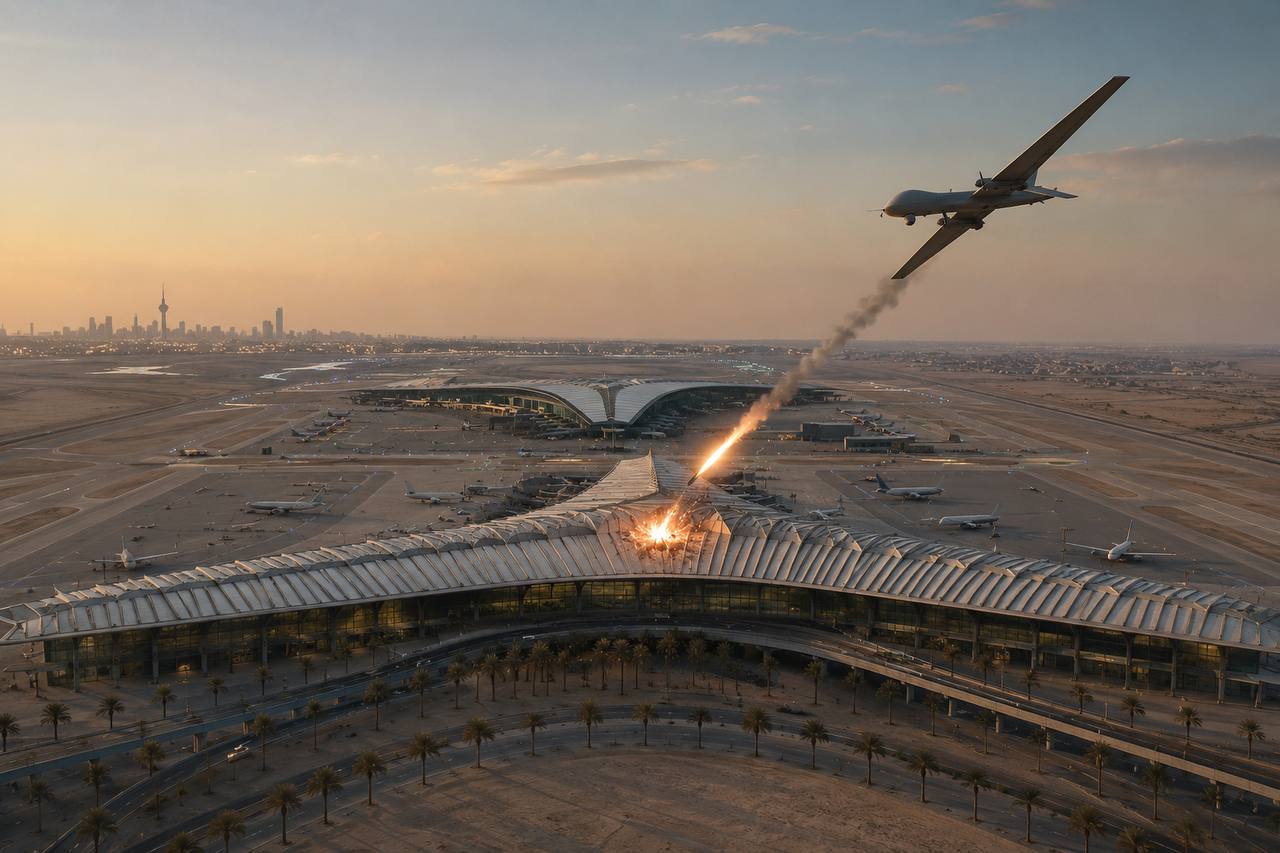

The tenuous peace that blanketed the Persian Gulf for the past two months has violently unravelled. On Wednesday, June 3, 2026, a dramatic escalation in hostilities between Washington and Tehran culminated in a barrage of Iranian drones and missiles directed at the Kingdom of Bahrain and the State of Kuwait. Unlike previous skirmishes that largely remained confined to military installations or isolated maritime territories, this latest exchange crossed a devastating new threshold by directly striking a bustling civilian transit hub. The bombardment of Kuwait International Airport has not only jeopardised a fragile truce initially negotiated by Pakistan in April, but has also sent shockwaves through the international community, raising the spectre of a broader regional war.
The epicentre of Wednesday’s chaos was Terminal 1 at Kuwait International Airport. In the early hours of the morning, incoming projectiles evaded defensive nets and slammed into the passenger facility. The immediate aftermath was defined by shattered glass, billowing smoke, and widespread panic among travellers and airport personnel. Civil aviation authorities were forced to mandate an emergency grounding of all departing flights, while incoming aircraft were hastily redirected to alternative airfields in neighbouring Gulf states to avoid the compromised airspace.
The human toll of the assault underscores the grave reality of this renewed conflict. According to health officials and emergency responders on the ground, the strike resulted in one confirmed fatality—an Indian expatriate employed within the terminal’s operational sector. Alongside this tragic loss of life, medical facilities across Kuwait City are currently treating 63 individuals for a range of severe injuries. Emergency dispatchers mobilised 25 ambulances to navigate the debris and transport the wounded. Hospital spokespersons have released sobering details regarding the casualties, confirming that victims are suffering from catastrophic blast effects. These include traumatic cerebral haemorrhages, profound head lacerations, and several cases requiring surgical amputations. Furthermore, the physical destruction extends beyond the immediate terminal footprint, with authorities noting significant structural compromises to the airport and collateral blast damage to several nearby diplomatic outposts.
Responsibility for the bloodshed was quickly claimed by the Islamic Revolutionary Guard Corps. In highly publicised broadcasts across state media channels, Iran’s military leadership framed the bombardment as a legally justified and precisely calculated retaliation against recent American aggression. The catalyst for this violent reprisal, according to Tehran, was a series of targeted United States military strikes that decimated an Iranian ground control and communications complex situated on Qeshm Island, strategically located near the vital Strait of Hormuz.
Iranian military commanders insisted their counter-strikes on American-affiliated assets in Bahrain and Kuwait were executed with pinpoint accuracy. Moreover, Tehran utilised the opportunity to issue a chilling ultimatum to the broader Arab world. The Revolutionary Guard explicitly warned that any sovereign nation permitting the United States military to utilise its airspace, territorial waters, or land bases to launch offensive operations against the Islamic Republic would immediately be designated as a legitimate and active military target.
The narrative emerging from the Pentagon and the United States Central Command offers a starkly different assessment of the morning’s events. American military officials firmly pushed back against Iranian assertions of widespread tactical success. According to Central Command, the integrated air defence networks operated by the United States and its regional coalition partners effectively neutralised the majority of the airborne threats.
Military briefers detailed that two ballistic missiles tracking towards Kuwaiti airspace experienced catastrophic failures and fell short of their intended coordinates. Simultaneously, a separate volley of three missiles directed at the island nation of Bahrain was successfully intercepted and destroyed mid-air. Washington vehemently denied Iranian claims that the United States Navy’s Fifth Fleet headquarters in Bahrain suffered direct hits or operational degradation. Furthermore, American diplomats defended the initial preemptive strikes on Qeshm Island, characterising them as purely defensive manoeuvres required to dismantle imminent threats and deter unprovoked hostile actions from Iranian forces.
This eruption of violence poses an existential threat to the diplomatic framework that has precariously held the region together since the spring. Brokered by diplomats from Islamabad, the April ceasefire was meant to provide breathing room following weeks of intense maritime and aerial combat. The truce was specifically designed to facilitate back-channel negotiations covering a labyrinth of disputes, from the revival of nuclear non-proliferation talks and the lifting of economic sanctions, to ensuring the unhindered passage of commercial shipping through the Strait of Hormuz and de-escalating proxy conflicts in Lebanon. However, persistent, low-level infractions have continuously chipped away at the foundational trust required for these talks, finally climaxing in Wednesday’s airport attack.
Global condemnation has been absolute. The Kuwaiti Ministry of Foreign Affairs condemned the strike as an unforgivable violation of international law regarding civilian infrastructure. Allied Gulf nations echoed these sentiments, demanding an immediate cessation of hostilities.
The ripples of the conflict immediately disrupted global financial markets. Recognising the heightened threat to the Strait of Hormuz—a maritime artery responsible for a massive portion of the world’s daily petroleum supply—commodity traders drove oil prices up by nearly three per cent, pushing Brent crude dangerously close to the $99 per barrel benchmark. Stock indices remained flat, buoyed only by surges in the defence and energy sectors, while gold maintained its position as a reliable safe-haven asset for anxious investors.
As emergency crews continue to clear the wreckage from Kuwait International Airport, the window for a peaceful resolution appears to be rapidly closing. The transition from military skirmishes to civilian casualties represents a grim evolution in this standoff. The international community now watches with bated breath to see if this devastating loss of life will force both Washington and Tehran back to the negotiating table, or if it marks the point of no return in a steady march towards total regional war.