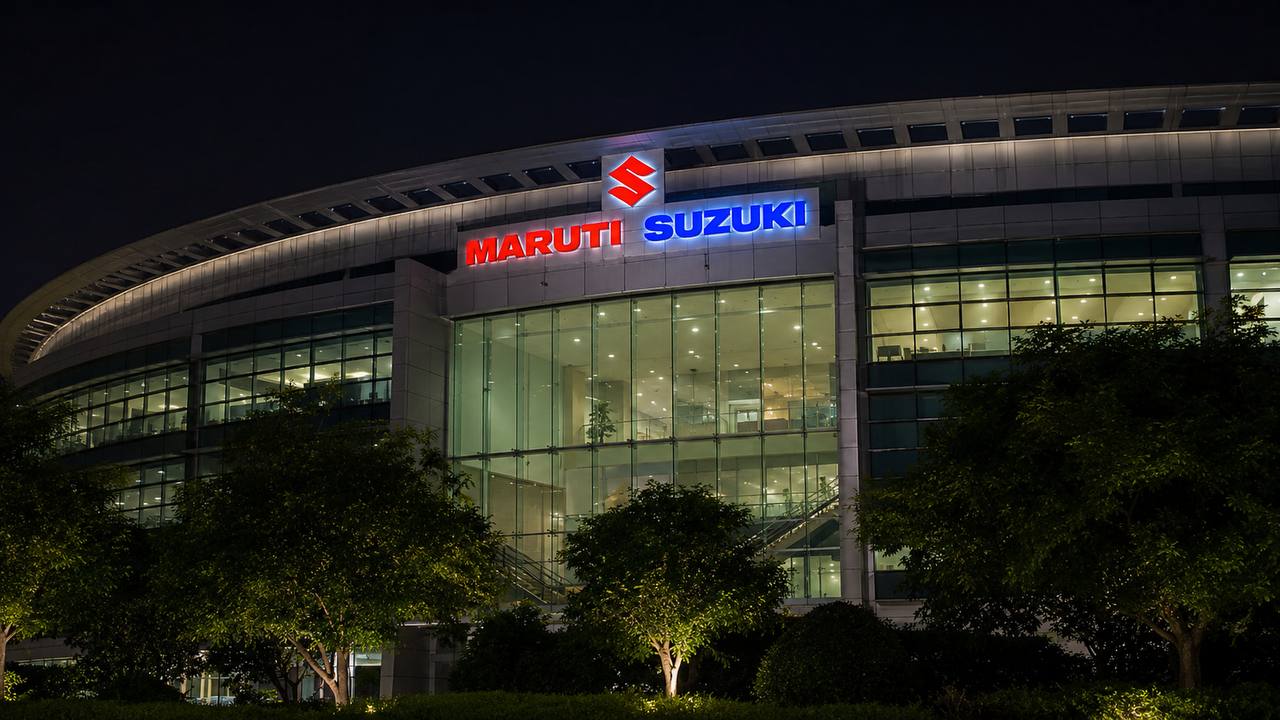

Maruti Suzuki India Limited has told corporate employees to work from home where operationally feasible and restricted foreign travel to business-critical trips only, as the company moves to contain fuel-linked discretionary costs two months into FY2026-27.
ℹ️ What Maruti Has Directed
- Corporate and non-plant staff asked to adopt work-from-home arrangements where feasible
- Foreign travel restricted — only business-critical trips will be approved
- Cost-containment linked directly to elevated fuel and logistics expenses
- Factory floor workers at Gurugram, Manesar, and Hansalpur are unaffected — remote work is not possible for plant roles
The directive applies across Maruti’s corporate functions, headquartered in Gurugram, Haryana. Its two manufacturing hubs — Manesar in Haryana and the Suzuki Motor Gujarat plant in Hansalpur, Gujarat — continue operations normally. The company’s supply chain draws on over 400 tier-1 suppliers clustered across Haryana, Rajasthan, and Gujarat, meaning inbound freight costs track diesel prices closely.
Maruti posted wholesale volumes of 24.22 lakh units in FY2025-26, holding roughly 39.7% of India’s passenger vehicle market. At that scale, fuel-linked logistics and corporate travel run into hundreds of crore annually — making even a moderate clampdown on foreign trips and daily commuting a material line-item saving.
The timing matters. Maruti’s operating profit margin has shown a broader historical range, with recent figures such as 11.74% in Q4 FY26 and a current TTM of 12.15%. A cost-containment push this early in the fiscal year — before Q1 results are even due — suggests leadership is protecting that band proactively rather than waiting for a margin miss to force action.
The work-from-home call also cuts against the grain of India Inc.’s return-to-office consensus. Tata Motors and Mahindra & Mahindra both enforced full in-office attendance for headquarters staff through 2025. Maruti’s partial reversal is a deliberate trade-off: hard rupee savings on transport allowances, fuel reimbursements, and building utilities versus the optics of a full-presence culture.
Foreign travel restrictions carry a sharper operational risk. Vendor negotiations, technology sourcing from Suzuki Motor Corporation in Japan, and export development meetings in Europe and Southeast Asia typically need in-person presence to close. Prolonged restrictions could slow decisions tied to the e Vitara — Maruti’s first battery electric vehicle, which was launched in India in December 2025. That launch involves active coordination with Suzuki’s global engineering and homologation teams, the kind of work that video calls handle poorly.
Maruti is scheduled to report Q1 FY2026-27 earnings on August 5, 2026. Those numbers will be the first concrete read on whether this cost drive is holding margins — or whether fuel prices have risen faster than the savings the directive can generate.
FAQ
Which employees does the directive cover?
Does this involve salary cuts or layoffs?
When will the restrictions be lifted?