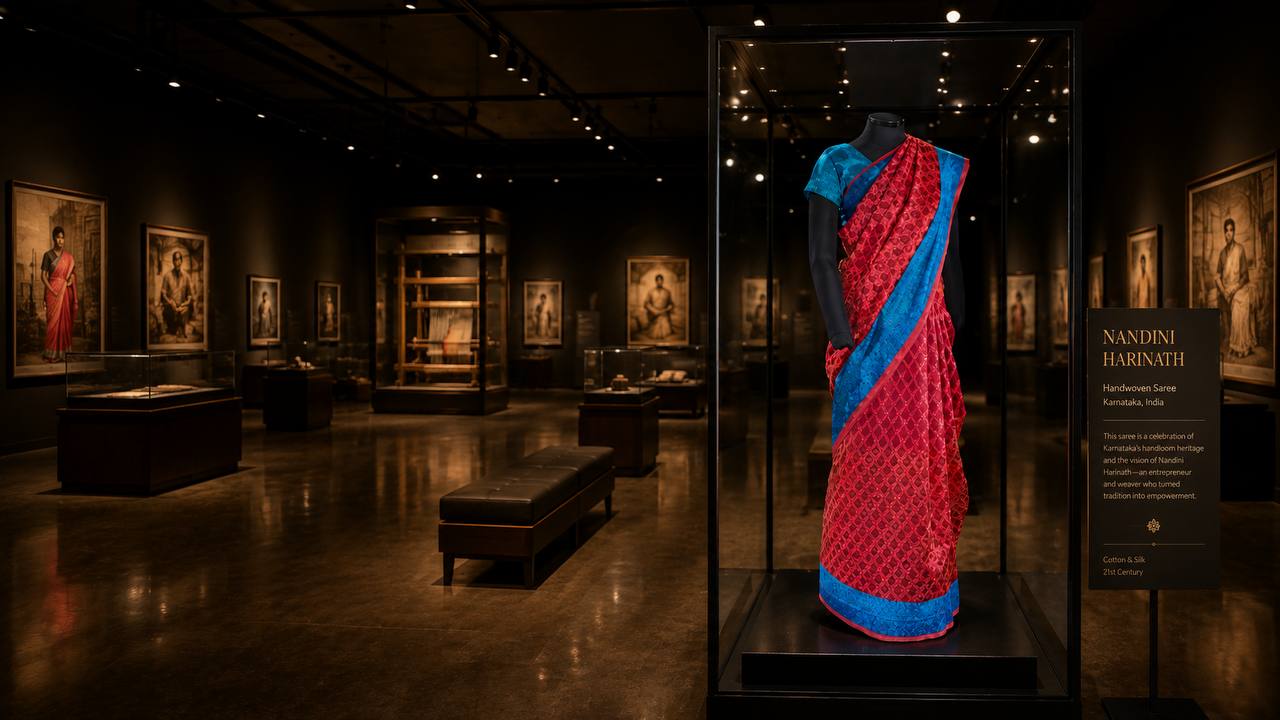

ISRO scientist Nandini Harinath’s one saree, worn on December 1, 2013, the day the Mars Orbiter Mission (MOM) spacecraft successfully left Earth’s orbit and began its journey to Mars, has recently joined the collection of the Smithsonian National Air and Space Museum in the United States.
This acquisition, announced recently, highlights India’s growing scientific prowess. It also underscores its unique cultural identity on a global stage. The move marks a significant moment for India’s space program. It brings a piece of Indian heritage to a global audience.
The Mars Orbiter Mission, launched in November 2013, achieved historic milestones. India became the first Asian nation to successfully reach Mars orbit. It was also the first country globally to achieve this on its maiden attempt with an indigenously developed propulsion system. This mission showcased ISRO’s advanced engineering capabilities.
Harinath, a senior scientist at the Indian Space Research Organisation (ISRO), played a crucial role in MOM. She was part of the team responsible for mission design and operations. Her choice to wear a traditional saree during such a pivotal event resonated widely. It symbolised the blend of modern scientific ambition with deep-rooted cultural heritage.
The saree itself represents a powerful blend. It merges traditional Indian attire with cutting-edge scientific achievement. This garment now serves as a tangible symbol of India’s contributions to space exploration. It also celebrates the increasing role of women in STEM fields globally.
This acquisition mirrors the inclusion of personal effects of Kalpana Chawla, the first Indian-origin woman in space, in museum collections, highlighting the museum’s commitment to showcasing global space pioneers and their cultural contexts. This demonstrates a consistent recognition of Indian contributions to space.
The Smithsonian National Air and Space Museum now features this unique artifact. It joins other significant items detailing human space exploration. The saree’s presence boosts international recognition of India’s scientific contributions. It also promotes cultural diplomacy between India and the United States.
The museum’s decision to acquire the saree reflects its mission. It aims to collect, preserve, and display artifacts. These artifacts tell the comprehensive story of flight and space exploration. Harinath’s saree adds a distinct narrative to this global collection. It showcases diversity in scientific achievement.
The saree is expected to be a prominent display. It will educate visitors about India’s space journey. This includes the pivotal role of women scientists like Harinath. It also highlights the nation’s rapid advancements in space technology and indigenous capabilities.
This artifact serves as an inspiration for future generations. It encourages young Indians, especially girls, to pursue careers in science and technology. It reinforces the idea that cultural identity and scientific pursuit can coexist powerfully.
ℹ️ Mars Orbiter Mission (MOM) Milestones
- Launched in November 2013 by ISRO.
- Made India the first Asian nation to reach Mars orbit.
- First country globally to succeed on its maiden attempt with an indigenously developed propulsion system.
- Showcased ISRO’s cost-effective engineering capabilities.
The museum currently features the saree as a prominent display in its ‘Futures in Space’ gallery, educating visitors about India’s space journey. Its display will further cement India’s legacy in global space history. This ongoing recognition underscores India’s growing stature in the international scientific community.