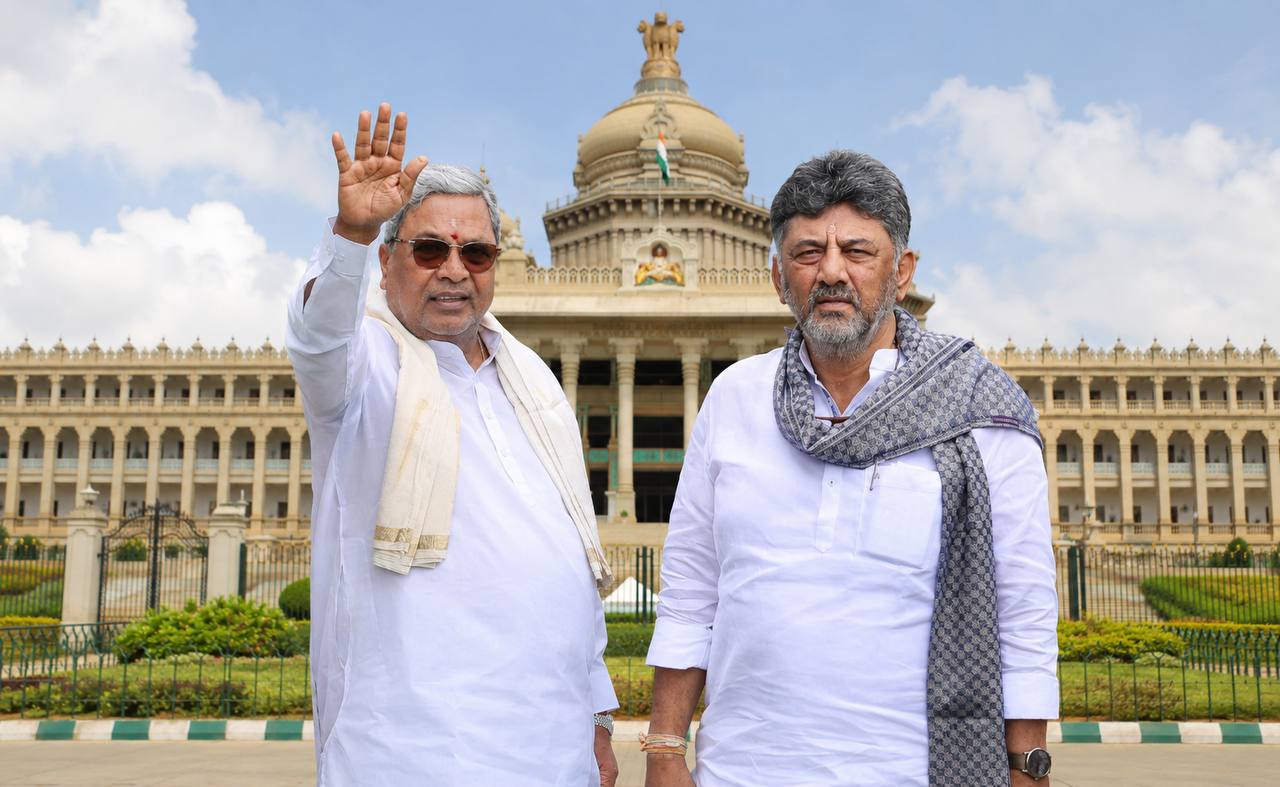

The Congress high command is meeting with Karnataka Chief Minister Siddaramaiah and Deputy CM D.K. Shivakumar today, 26 May 2026, amid ongoing discussions about the state’s leadership and the party’s preparations to contest 4 Rajya Sabha seats. Speculation continues regarding a potential mid-term leadership change, a rotation arrangement that D.K. Shivakumar’s supporters have actively pushed, but no final decision has been announced.
The arithmetic is blunt. Each Rajya Sabha seat from Karnataka requires roughly 46 first-preference votes in the 224-member assembly. Congress holds 136 seats — enough to win all 4 comfortably — but only if every MLA votes in line. A leadership contest in the weeks before an election notification would fracture that discipline at the worst possible moment.
There is no change. Siddaramaiah continues as Chief Minister. The focus right now is on Rajya Sabha.
Karnataka Congress Leader · Republic World · 26 May 2026
BJP holds 66 assembly seats and JD(S) holds 19. Together, they can target at most one seat without engineering cross-voting inside the Congress legislative group. A single defection or absence among Congress MLAs tightens the margin enough to put a second seat at genuine risk. The high command’s calculation is that Shivakumar’s organisational energy is more valuable managing those 136 votes than triggering a reshuffle that could peel off even three or four legislators.
ℹ️ Karnataka Rajya Sabha Seat Arithmetic
- Karnataka elects 12 Rajya Sabha members in total; 4 seats fall due in this cycle.
- Quota per seat: approximately 46 first-preference assembly votes.
- Congress at 136 seats clears the 4-seat threshold with a surplus of roughly 20 votes.
- BJP (66) and JD(S) (19) combined cannot win a second seat without cross-voting.
- Any floor management lapse ultimately attaches to the sitting Chief Minister.
Siddaramaiah’s government took office in May 2023 after Congress ended the BJP’s five-year rule in Karnataka. He now enters his fourth year in this term. His earlier stint, from 2013 to 2018, made him the first Karnataka CM to serve a full five years without a break — a record that gives him a political weight Shivakumar cannot yet match on the assembly floor. A mid-cycle switch would hand the Opposition a ready instability narrative just as the 2028 assembly cycle begins to take shape.
The government’s Gruha Lakshmi scheme — which transfers ₹2,000 per month to women heads of households — has enrolled more than 1.1 crore beneficiaries across Karnataka’s 31 districts. Disrupting that welfare story with an internal power struggle would cost Congress more in public perception than any leadership transition could gain in factional appeasement.
Shivakumar has not publicly contested the high command’s call. He holds the Deputy CM’s chair and the state party president’s post simultaneously, maintaining a parallel political infrastructure across Karnataka that keeps his succession case alive without forcing a confrontation. The arrangement suits both men for now.
The Rajya Sabha election notification is expected within 30 days. If Congress sweeps all 4 seats, Shivakumar’s claim to the top post strengthens considerably; if the party loses even one to cross-voting, the accountability falls on floor management — which is, constitutionally and politically, the Chief Minister’s domain.
FAQ
Why is Congress not changing the Karnataka CM?
How many first-preference votes does each Rajya Sabha seat need?
What is the Gruha Lakshmi scheme?