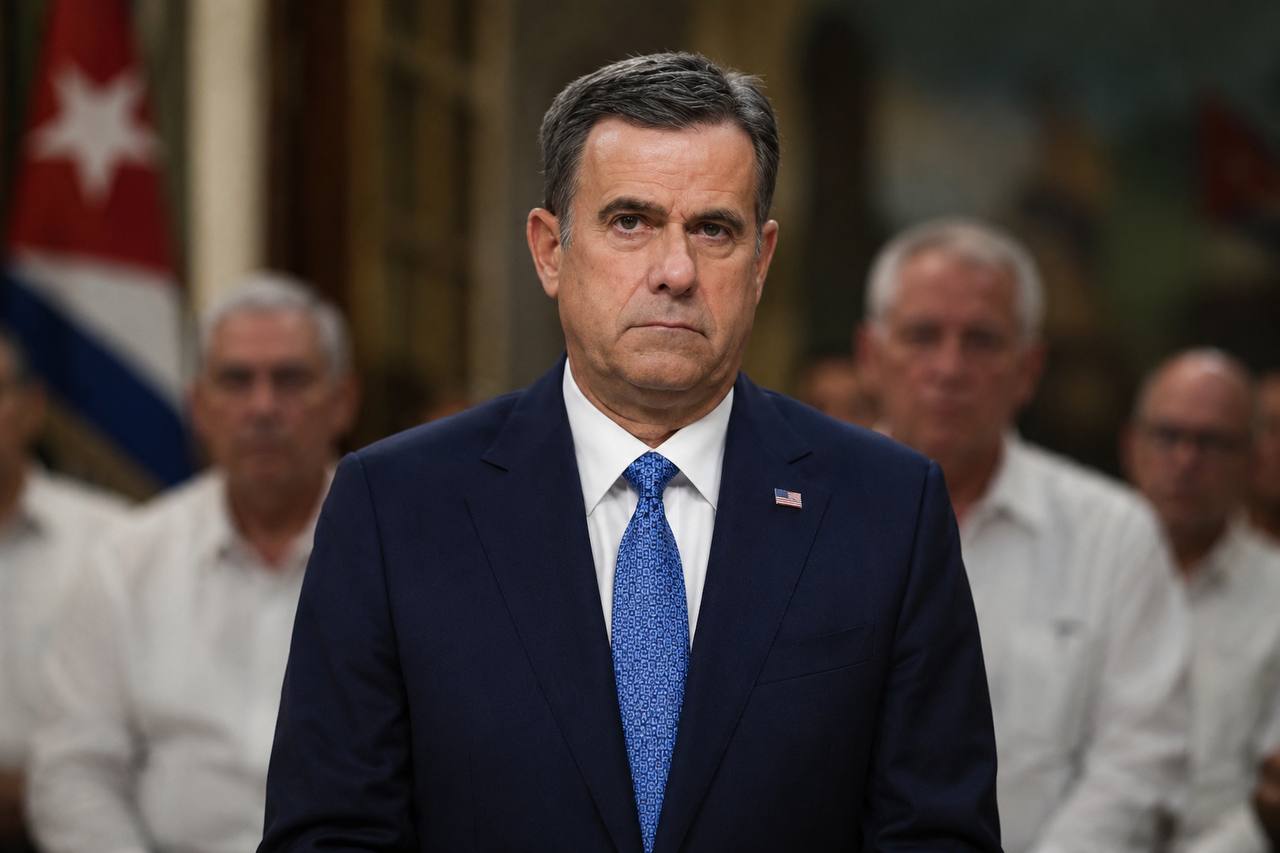

CIA Director John Ratcliffe’s visit to Havana on May 14, 2026, is one of the most significant intelligence engagements between the United States and Cuba in over six decades. Sitting across from Raulito Rodriguez Castro—the 36-year-old grandson of Raúl Castro—and senior figures including Interior Minister Lazaro Alvarez Casas and Cuba’s intelligence leadership, Ratcliffe delivered a direct message from President Donald Trump. The agenda, per Cuban statements and CIA briefings to the Associated Press, focused on intelligence cooperation, economic stability, and security. No joint communiqué followed. That silence, amid Cuba’s cascading crises, reveals more than any press conference could.
This was not a diplomatic thaw. It was a high-stakes reconnaissance mission wrapped in the language of pragmatic engagement. Cuba’s electrical grid has collapsed four times in 14 months. Venezuelan oil deliveries have cratered from 90,000 barrels per day in 2022 to under 30,000. Russian and Chinese intelligence and military footprints have expanded noticeably enough to feature in Pentagon contingency planning. In this context, Ratcliffe’s trip represents Washington’s attempt to manage a failing adversary before external powers exploit the vacuum.
The Meeting’s Stark Details
The Cuban government’s official readout confirmed a U.S. delegation led by the CIA Director was received at Havana’s request. The venue—the Ministry of the Interior—houses Cuba’s security apparatus and the Dirección de Inteligencia, an agency the CIA has contested for generations. Choosing an intelligence channel over State Department channels was deliberate. Secretary of State Marco Rubio, a Cuban-American architect of tough policies, carries symbolic weight that could inflame hardliners on both sides. Ratcliffe, a former Texas congressman and Trump loyalist with less personal Cuba baggage, kept the talks functional and deniable.
Both sides arrived with lists. The U.S. side emphasized “fundamental changes”—language echoing the early 1990s after the Soviet Union’s collapse triggered Cuba’s “Special Period.” Havana pushed back, insisting it poses “no threat” to U.S. security and demanding removal from the State Sponsors of Terrorism list (reinstated by Trump in his first term and again in 2025). The lack of a public readout or press access mirrors other sensitive CIA Director missions. Spy chiefs trade in ultimatums, not soundbites.
- Date: May 14, 2026 — First acknowledged high-level CIA visit in 60+ years.
- U.S. Lead: John Ratcliffe — Trump’s most trusted intelligence figure.
- Cuban Leads: Raulito Rodriguez Castro (Castro dynasty representative) and Interior Minister Lazaro Alvarez Casas (U.S.-sanctioned).
- Outcome: No joint statement; substantive but private discussions.
Strategic Framing: Intelligence Over Diplomacy
Sending the CIA Director signals that this remains a security and intelligence matter first. Cuba’s deepening ties with Russia and China pose direct concerns—potential SIGINT sites, naval access, and influence operations, mere miles from Florida. The visit tests whether Havana can be pried away, at least partially, from those orbits in exchange for economic relief.
Trump’s approach is transactional: carrots on migration control, counter-narcotics, and limited economic openings, paired with continued maximum pressure via sanctions. Cuba’s regime faces an existential economic bind. Chronic blackouts, food shortages, and emigration surges have eroded control. Engaging the younger Rodriguez Castro may be an attempt to read the regime’s internal dynamics and succession signals.
Yet realism demands skepticism. Decades of U.S. policy swings—from Obama’s opening to Trump’s reversal and Biden’s partial reset—show limited results. The Cuban regime’s survival strategy has long relied on external blame and internal repression. Fundamental changes (political opening, military divestment from the economy, and human rights improvements) clash with the system’s DNA.
Broader Geopolitical Context
This encounter fits a larger pattern of renewed great-power competition. As China and Russia probe Western hemispheres, the Caribbean becomes contested terrain again. A weakened Cuba risks becoming a more useful proxy or failed state on America’s doorstep. Ratcliffe’s mission assesses the regime’s stability, probes for leverage points, and delivers a clear message: cooperation is possible, but on U.S. terms.
For Trump’s “America First” foreign policy, the visit exemplifies pragmatic deal-making. It prioritizes U.S. interests—border security, regional stability, and countering adversaries—over ideological grandstanding. Florida’s Cuban-American community, a key constituency, will watch closely; any perceived softness will face scrutiny.
Critics from the engagement camp will call it outdated Cold War thinking. Hardliners may worry any dialogue legitimizes the regime. Both miss the point: great powers do not ignore failing states near their borders when rivals are circling. Management through intelligence channels allows calibrated pressure without premature normalization.
Outlook and Risks
The visit’s legacy depends on follow-through. Quiet working groups on migration or counternarcotics could yield wins. But without Cuban movement on core U.S. concerns—repression, alliances, and economic militarization—talks will stall. Cuba’s list (sanctions relief, terrorism delisting) collides with Washington’s demand for verifiable change.
May 14, 2026, may not herald peace in the Caribbean, but it does reboot a frozen rivalry with new urgency. In an era of multipolar friction, managing Cuba is no longer optional. Ratcliffe’s quiet trip in Havana reminds us that history’s embers can reignite when power vacuums form. The real test will be whether this reconnaissance produces leverage—or merely confirms the regime’s unyielding trajectory.