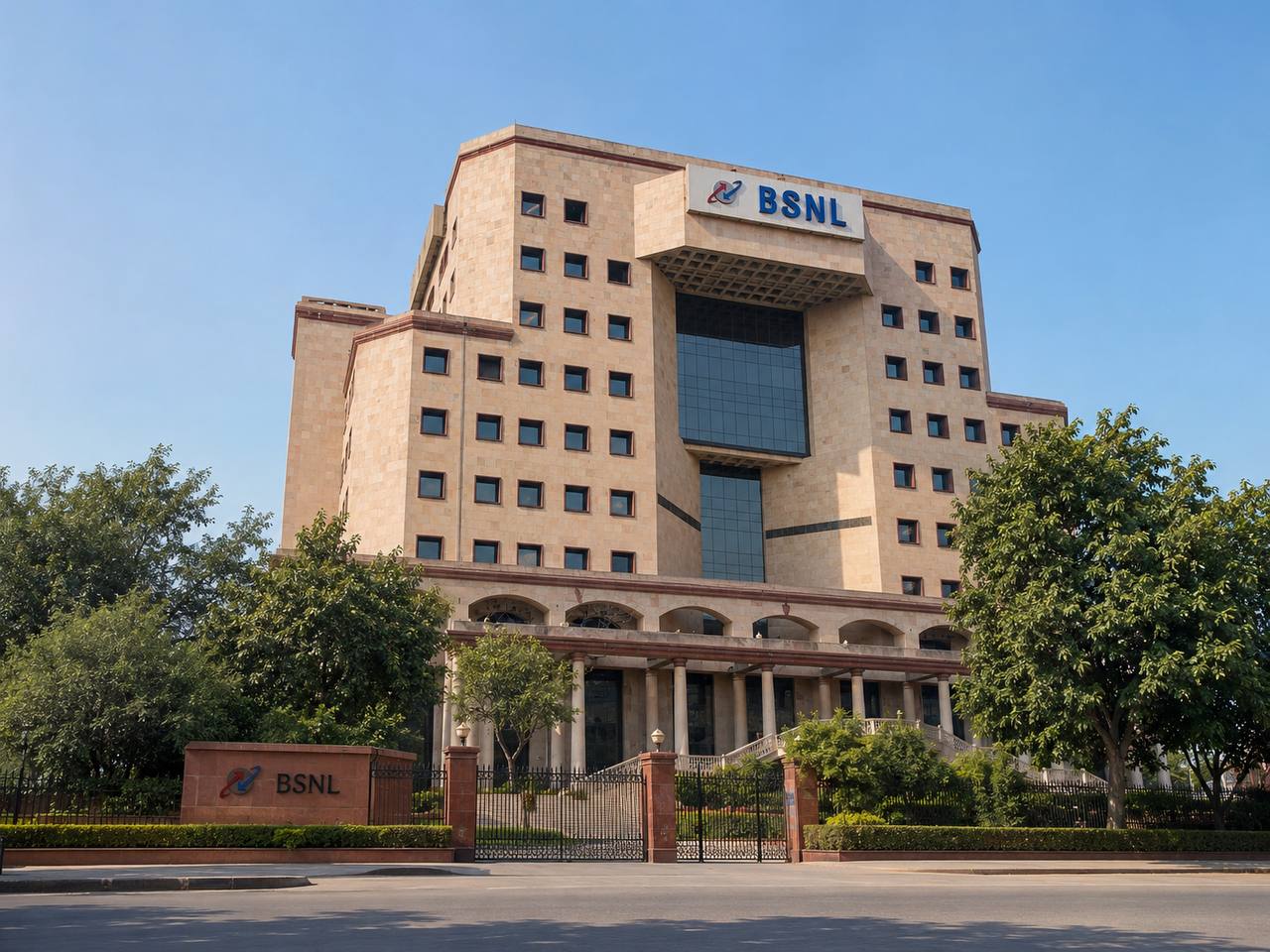

Bharat Sanchar Nigam Limited (BSNL) is scripting one of the most remarkable survival-to-glory stories in Indian corporate history. Once a telecom titan brought to the brink of collapse by massive losses and technological stagnation, the state-owned enterprise is rising from the ashes. Through an aggressive 4G rollout, unwavering cost discipline, and a deep commitment to indigenous technology, BSNL’s turnaround is a testament to potent political will, sweeping economic reforms, and the realization of the Aatmanirbhar Bharat (Self-Reliant India) vision.
The Fall: From Dominance to the Brink
Created in 2000 from the telecom wing of the Department of Telecommunications, BSNL initially ruled India’s fixed-line and rural markets. However, the landscape shifted violently after 2016. Reliance Jio’s aggressive, disruptive pricing triggered a brutal industry shakeout.
Weighed down by high employee costs, massive pension liabilities, bureaucratic inertia, and a fatal delay in adopting new technologies, BSNL found itself in a steep freefall. By the late 2010s, severe subscriber erosion, crippling debt, and annual losses bleeding into the thousands of crores raised a grim, existential question: Could BSNL survive?
The Lifeline: Strategic Political Intervention
Rather than surrendering the telecom giant to privatization, the government under Narendra Modi chose the harder path of revival. What followed was not a simple bailout, but a heavily structured, performance-tied lifeline totaling approximately ₹3.22 lakh crore.
- The 2019 Package (₹69,000 crore): Introduced a massive Voluntary Retirement Scheme (VRS) that successfully trimmed the bloated workforce by nearly 80,000 employees.
- The 2022 & Subsequent Packages: Focused on critical debt restructuring, much-needed capital infusion, spectrum allocation for 4G/5G, and viability gap funding to sustain unprofitable rural operations.
These strategic investments transformed BSNL from a sinking ship into a vessel for national self-reliance.
The Glory: Championing Indigenous Innovation
The absolute cornerstone of BSNL’s resurgence is its bold bet on homegrown technology. Rejecting foreign dependency, BSNL partnered with domestic heavyweights: C-DOT for the core network, Tejas Networks for radio access equipment, and TCS for system integration.
The result? India’s first fully homegrown 4G stack.
- By early 2026, nearly 98,000 indigenous 4G sites were installed, with over 96,000 actively on air.
- These towers, heavily concentrated in previously unconnected rural frontiers, are 5G-ready.
This monumental rollout elevates India into an elite group of nations possessing end-to-end indigenous telecom capabilities. It fortifies national security, slashes import reliance, and serves as a crown jewel for the Make in India initiative.
By the Numbers: A Financial Phoenix
The strategic overhaul has delivered historic financial milestones, breaking nearly two decades of gloom:
- Revenue Growth: In FY25, operating revenue hit ₹20,841 crore, an 8 per cent year-on-year increase. For FY26, BSNL is chasing an ambitious revenue target of ₹27,500 crore.
- Margin Expansion: EBITDA surged dramatically to ₹5,396 crore from ₹2,164 crore in FY24.
- Historic Profits: The company recorded back-to-back quarterly net profits in Q3 (₹262 crore) and Q4 (₹280 crore) of FY25—its first in 18 years.
- Loss Reduction: Annual net losses narrowed sharply to ₹2,247 crore, with several regional circles turning EBITDA-positive.
Winning Back the Masses
Infrastructure alone doesn’t win markets; customers do. BSNL has launched highly aggressive acquisition campaigns, headlined by the ₹1 Freedom Offer—providing a SIM with 30 days of unlimited calls, 2GB daily data, and 100 SMS for just a single rupee. By partnering with India Post’s vast network of over 1.65 lakh branches, BSNL is ensuring these offers reach the deepest rural and semi-urban pockets, rapidly expanding its active user base.
Grounded in Reality: The Battles Ahead
Despite its triumphant resurgence, BSNL’s path to sustained glory is fraught with formidable challenges.
- The Duopoly: India’s telecom market remains dominated by the fierce Jio-Airtel duopoly, both boasting superior scale and widespread urban 5G coverage.
- Active Users: While BSNL reports over 90 million subscribers, active usage metrics trail behind private peers.
- Service Consistency: Urban users continue to report network inconsistencies.
- Financial Pressures: Legacy costs, depreciation, and massive capex requirements have temporarily pushed BSNL back into the red in some FY26 quarters, proving that the margin for error remains slim.
A Blueprint for the Future
Strategically, BSNL is no longer viewed as a purely commercial entity, but as vital digital infrastructure—as essential as highways or railways. Its survival guarantees market competition, drives digital inclusion in the most remote villages, and acts as a firewall for technological sovereignty.
As of mid-2026, BSNL has successfully transitioned from a doomed legacy loss-maker to a modernized, aggressive competitor. If the company maintains its current execution discipline and flawlessly navigates its 5G integration, BSNL will not just survive; it will cement its legacy as India’s vital third telecom force, providing a powerful blueprint for public sector revival worldwide.