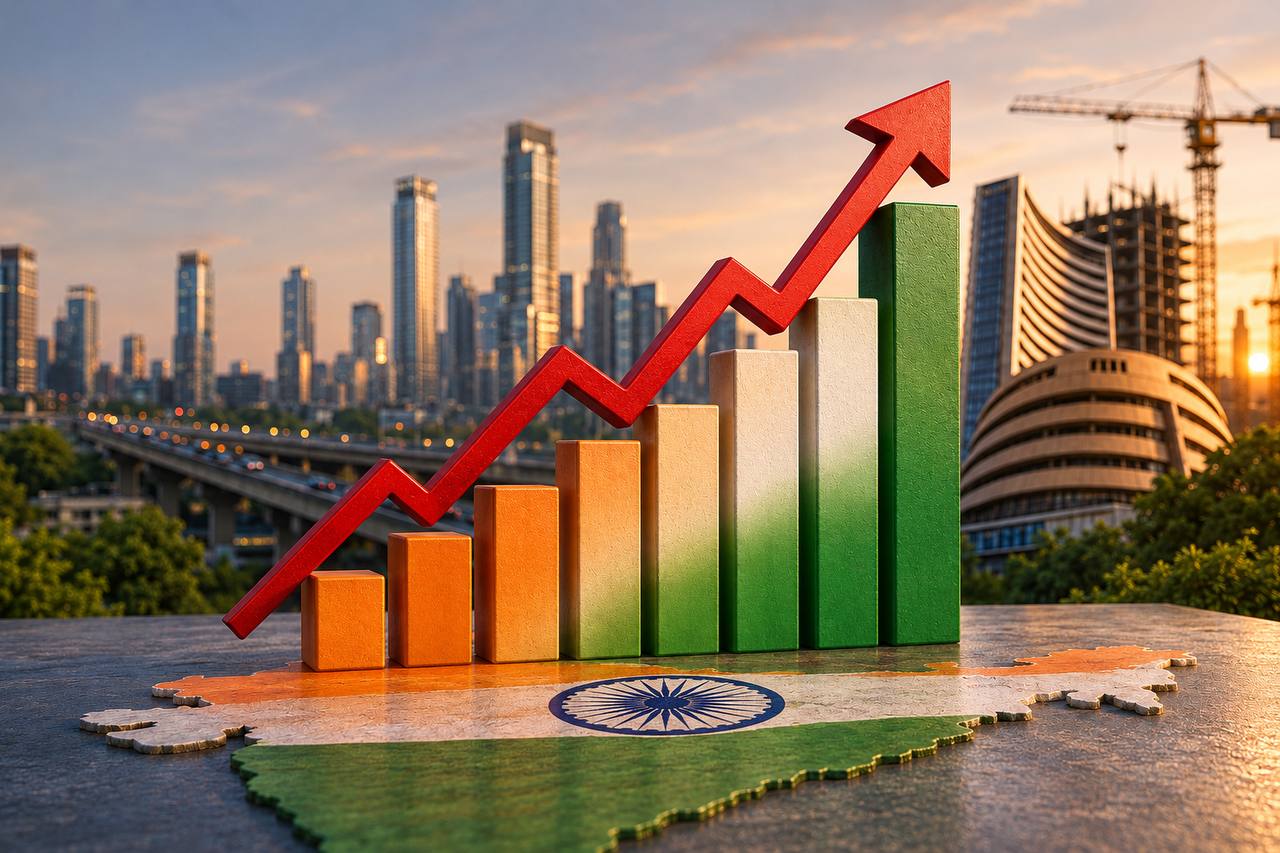

India’s Gross Domestic Product (GDP) recorded a robust growth rate of 7.8% in the fourth quarter (Q4) of FY26. This strong quarterly performance culminated in an overall annual growth rate of 7.7% for the fiscal year, anchored to the 2022-23 base year. This sustained economic expansion is particularly notable as it occurs against a backdrop of severe global headwinds. With ongoing geopolitical tensions in the Middle East and shifting international trade policies weighing heavily on economies worldwide, the data suggests that the domestic economy has managed to insulate itself from broader global macroeconomic stagnation. The 7.7% annual figure reflects a structural buffer within the economic framework that has effectively absorbed external shocks, maintaining a trajectory of expansion while other regions face contraction or flatlining growth.
Navigating Geopolitical Headwinds
A granular examination of the quarterly GDP growth rate from FY24 through FY26 highlights a highly volatile global environment punctuated by specific geopolitical events. These events temporarily suppressed growth but were consistently followed by swift domestic recoveries. In FY24, the Israel-Hamas conflict fueled widespread global uncertainty, which directly correlated with a deceleration in growth from 7.6% in Q2 to 7.1% in Q3. Subsequently, Q1 FY25 saw a promising uptick to 7.5%, but the immediate impact of Red Sea disruptions on global shipping and trade routes quickly materialized, dragging the growth rate down significantly to 6.6% in Q2 FY25.
The economic trajectory through FY26 clearly illustrates the dynamic push-and-pull between external macro pressures and domestic stabilization efforts. The fiscal year commenced with subdued 6.7% growth in Q1, a period directly linked to trade uncertainty triggered by newly imposed US tariffs. However, the economy demonstrated remarkable elasticity, rebounding sharply to an impressive 8.4% growth rate in Q2 FY26. While the latter half of the fiscal year saw the escalation of the Israel-Iran conflict—which significantly disrupted the critical Hormuz trade route and global energy logistics—the GDP growth rate stabilized at a robust 7.8% for both Q3 and Q4. This ability to plateau at a high growth level, despite severe supply chain bottlenecks in the Middle East, indicates that domestic demand and targeted fiscal interventions successfully offset the drag from the external sector.
Key Economic Events & Growth Rates
- FY24 Q2 — GDP growth 7.6%
- FY24 Q3 — GDP growth 7.1% (Impact of Israel-Hamas conflict)
- FY25 Q1 — GDP growth 7.5%
- FY25 Q2 — GDP growth 6.6% (Impact of Red Sea disruptions)
- FY26 Q1 — GDP growth 6.7% (Impact of newly imposed US tariffs)
- FY26 Q2 — GDP growth 8.4% (Sharp rebound)
- FY26 Q3 & Q4 — GDP growth 7.8% (Stabilized despite Israel-Iran conflict, Hormuz disruption)
Proactive Policy Measures and the Capex Push
The economic resilience depicted in the Q4 FY26 data is not purely organic; it is fundamentally underpinned by aggressive and proactive fiscal policies implemented by the government. To insulate the domestic economy from global supply chain shocks, policymakers have maintained a strict focus on capacity building. Central to this strategy is a substantial and sustained capital expenditure (capex) push. Budgetary allocations for infrastructure have been significantly expanded, targeting a massive capex of ₹12.2 trillion, representing a multi-year effort to modernize logistics and manufacturing.
Key measures driving this internal growth engine include the strategic expansion of Production Linked Incentive (PLI) schemes. Recognizing the critical vulnerabilities exposed by international trade disruptions, financial outlays have been drastically increased to ₹400 billion for electronics component manufacturing and ₹100 billion for establishing a robust container manufacturing ecosystem. Furthermore, the implementation of the Semiconductor Mission 2.0 and long-term tax holidays for data centers through 2047 reflect a strategic pivot towards high-value, self-reliant technological manufacturing.
In tandem with manufacturing incentives, physical infrastructure development has been accelerated to reduce domestic logistical bottlenecks—a crucial measure when external shipping routes like the Red Sea and the Strait of Hormuz are compromised. Major projects, such as the development of seven high-speed rail corridors and dedicated chemical parks, aim to lower the internal cost of doing business, thereby enhancing the global competitiveness of domestic industries regardless of external freight volatility.
Fostering Domestic Demand
Beyond supply-side interventions and infrastructure spending, proactive measures to stimulate domestic consumption have played a vital role in sustaining the 7.7% overall FY26 growth. The rationalization of GST rates and targeted income tax adjustments have provided immediate financial relief to consumers, effectively boosting discretionary spending across multiple sectors, including consumer durables and automotive. Additionally, the broader consumption narrative has been supported by a focus on rural economic stability. Consistent agricultural output, aided by favorable monsoon conditions and government initiatives, has bolstered rural incomes. This dual engine of urban and rural demand creates a highly balanced consumption pattern that acts as a robust shock absorber against sudden fluctuations in export revenues. By systematically strengthening the purchasing power of the domestic market, policymakers have mitigated the adverse impacts of global trade uncertainties, ensuring that factories remain operational even when international orders decline.
Conclusion
The 7.8% Q4 growth and the overarching 7.7% annual growth rate for FY26 serve as a testament to an economy successfully navigating unprecedented external pressures through deliberate internal fortification. The data clearly indicates that while global headwinds—ranging from geopolitical conflicts to shifting tariff regimes—continue to persist, their domestic impact has been significantly blunted. The strategic combination of aggressive infrastructure spending, targeted manufacturing incentives, and robust domestic demand stimulation provides a highly effective blueprint for economic management and sustained corporate growth.


