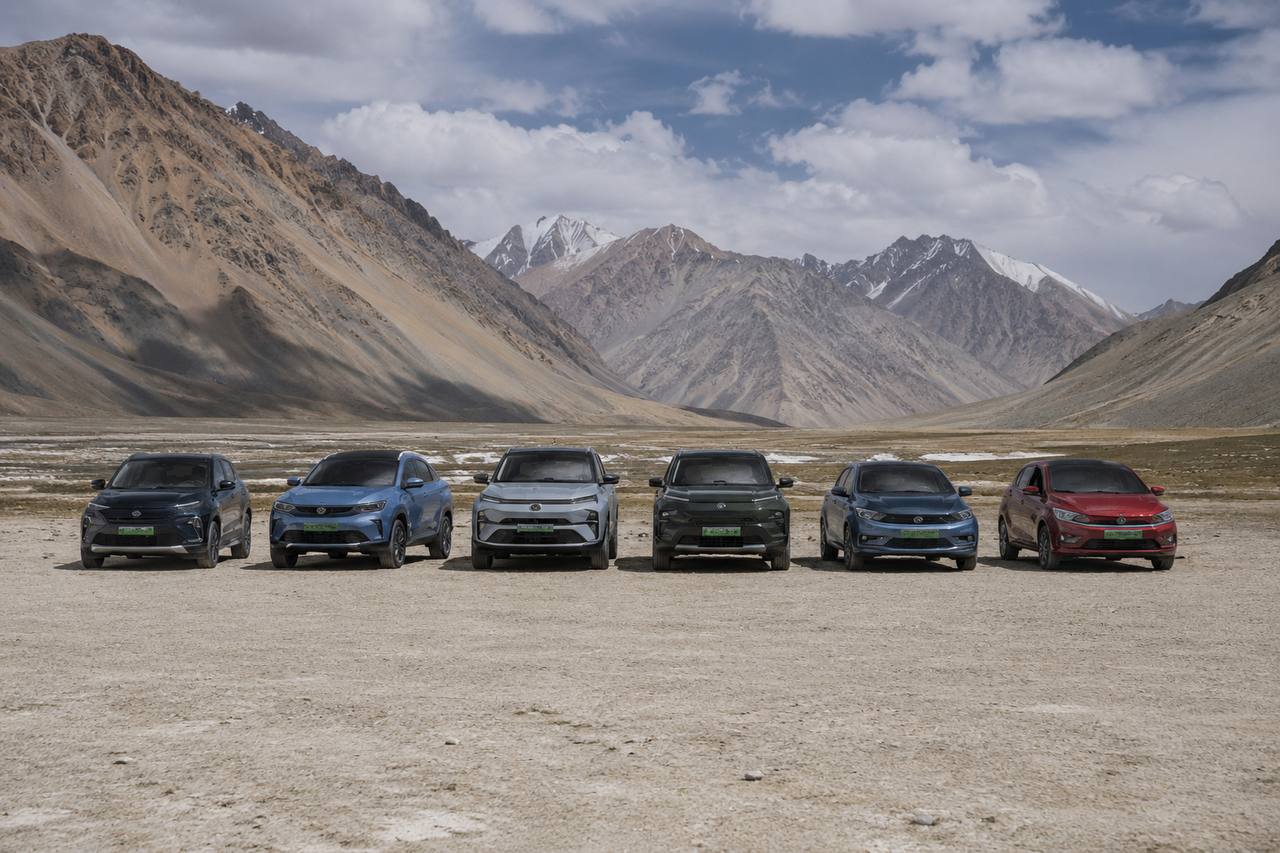

When Tata Motors’ MD and CEO Shailesh Chandra recently confirmed a 50% expansion in the automaker’s electric vehicle (EV) production capacity, it was more than just a corporate milestone; it was a resounding vote of confidence in India’s electric mobility narrative. Tata, which currently commands a ~60% market share in the domestic passenger EV space for FY26, is no longer just testing the waters. Driven by the sustained success of the Punch EV and Nexon EV, the company is investing heavily ahead of the demand curve.
Yet, as automakers aggressively ramp up production and the Indian market celebrates unprecedented sales milestones, a critical bottleneck looms in the rearview mirror. The hardware is rolling off the assembly lines, but the charging infrastructure—and crucially, the civic responsibility required to maintain it—must catch up if this success story is to endure.
The Manufacturing Boom: A Structural Shift in Indian Auto
India’s EV success story has officially moved from the periphery to the mainstream. Late in FY26, the domestic passenger EV segment crossed the 1-lakh unit monthly retail mark for the first time. This tipping point is the result of a powerful confluence: falling battery costs, aggressive model proliferation, and robust government backing.
Tata’s decision to increase capacity by 50% without a greenfield site is an exercise in strategic agility. By reconfiguring existing lines at its Pune plant and anchoring battery supply through the broader Tata ecosystem—most notably the upcoming Agratas Energy Storage Solutions facility in Gujarat—Tata is signalling market dominance. This capacity expansion echoes the strategic posturing we have seen across the wider auto industry, acting as a crucial signal to reassure dealer networks and investors before rivals can consolidate order pipelines.
And the rivals are indeed closing in. Mahindra’s aggressive entry with the BE 6e and XEV 9e platforms is pulling premium buyers, while Hyundai’s Creta Electric is bringing fierce volume competition to the mid-SUV bracket. However, the true catalyst for this sustained demand is the PM e-DRIVE (Electric Drive Revolution in Innovative Vehicle Enhancement) scheme. With a massive ₹10,900 crore allocation designed to subsidize EV adoption and build charging networks, fleet and government buyers have opened a massive secondary demand channel alongside retail consumers.
The Bottleneck: When “Range Anxiety” Becomes “Charger Anxiety”
However, building electric cars is only half the equation. The other half is keeping them running. As Tata, Mahindra, and Hyundai flood the roads with zero-emission vehicles, India’s charging infrastructure is struggling to keep pace.
While the PM e-DRIVE scheme allocates significant capital to charging infrastructure, deployment remains fragmented. Range anxiety—the fear of a battery dying before reaching a destination—has largely evolved into “charger anxiety.” Drivers are less worried about the car’s inherent range and more concerned about whether the charger at their destination will actually be functional, available, and compatible.
Currently, EV adoption is heavily skewed toward buyers who have dedicated home charging setups. For EVs to penetrate the massive demographic of apartment dwellers and single-car households, a robust, reliable, and ubiquitous public charging network is non-negotiable.
The Missing Link: Civic Duty and Infrastructure Maintenance
This brings us to the most overlooked variable in India’s EV equation: public sense and the maintenance of shared infrastructure.
Pouring billions of rupees into rapid DC chargers along highways and urban centers is futile if the hardware falls into disrepair. A broken charger is arguably worse than no charger at all, as it breeds consumer distrust and actively harms the reputation of the EV ecosystem.
In India, public infrastructure often suffers from a tragedy of the commons. For the EV revolution to succeed, there needs to be a fundamental shift in civic responsibility. Reports of charging cables left in the dirt to be run over, vandalized touchscreens, and “ICEing”—where internal combustion engine (ICE) vehicles illegally park in dedicated EV charging spots—are increasingly common.
Operators can only do so much. Maintenance cannot be purely reactive, relying on corporate technicians to fix preventable damage. It requires a proactive public sense of ownership. EV drivers and the general public must treat charging stations with the same respect afforded to vital public utilities. Simple acts—like securely returning a charging gun to its holster, reporting software glitches immediately through the app, and respecting the designated parking spaces—are the foundational behaviors of a mature EV ecosystem.
Furthermore, charging point operators (CPOs) and the government must collaborate on educational campaigns. Just as public awareness drives Swachh Bharat (Clean India), a similar ethos must be applied to our green mobility infrastructure.
The Road Ahead
Tata Motors’ ambitious 50% capacity expansion is a clear indicator that the demand for electric vehicles in India is real, resilient, and growing. Whether this new capacity translates to retail volumes in FY27 or FY28, depending on the Agratas plant’s timeline, the trajectory is locked in.
India has proven it can build world-class electric vehicles and generate consumer demand. The government has proven its willingness to fund the transition. Now, the final test lies with the public. The true measure of India’s EV success will not just be the millions of cars rolling out of Pune, but the collective public sense that keeps the nation’s charging network humming, intact, and ready for the future.