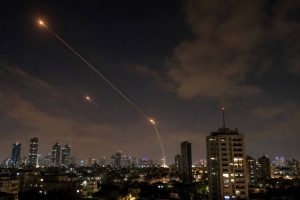
The contemporary battlespace has fundamentally shifted, eroding the historical presumption of unchallenged air supremacy that has characterised major military interventions for the past three decades. The proliferation of advanced integrated air defence systems (IADS), asymmetric drone warfare, and mature electronic warfare (EW) capabilities has imposed a new, highly lethal calculus on power projection. Two recent campaigns—the joint U.S.-Israeli Operation Epic Fury against Iran in early 2026, and India’s Operation Sindoor against Pakistan in May 2025—serve as vital case studies in modern kinetic conflict.
While both operations utilised advanced fourth- and fifth-generation airframes alongside sophisticated stand-off munitions, the outcomes in terms of materiel attrition and strategic efficacy were starkly different. Analysing these two conflicts side-by-side reveals critical lessons regarding the relationship between operational objectives, geographic constraints, and the unavoidable realities of modern combat attrition. Furthermore, the disparate public reactions to these campaigns highlight a persistent bias in international defence analysis, where narrative often supersedes objective data.
Part I: The Cost of Strategic Denial — U.S. Losses in Operation Epic Fury
Operation Epic Fury, initiated on 28 February 2026, represented one of the most ambitious and complex air campaigns of the 21st century. Triggered by crossing intelligence thresholds regarding Iran’s nuclear posture, the U.S.-Israeli coalition aimed for the long-term degradation of Iranian nuclear infrastructure, ballistic missile networks, and regional proxy command structures. The campaign achieved significant operational milestones—most notably the elimination of Supreme Leader Ali Khamenei in its opening phase—and concluded with a ceasefire in early April 2026.
However, this five-to-six-week campaign exacted a severe toll on U.S. aviation assets. According to the Congressional Research Service (CRS) report of 13 May 2026, the United States suffered the loss of, or significant damage to, 42 aircraft.
Aircraft Losses in Operation Epic Fury
| Aircraft Type | Quantity |
|---|---|
| MQ-9 Reaper (Unmanned Combat Aerial Vehicle/UCAV) | 24 |
| KC-135 Stratotanker (Aerial Refuelling Aircraft) | 7 |
| F-15E Strike Eagle (Multi-role Strike Fighter) | 4 |
| F-35A Lightning II (5th-Gen Stealth Multirole – Damaged) | 1 |
| Support Platforms (A-10, E-3, MC-130J, MQ-4C variants) | 6 |
| Total | 42 Assets |
The financial burden of these losses alone is estimated at $2.6 billion in replacement and repair costs. This level of attrition is unprecedented in recent U.S. operational history and demands rigorous scrutiny.
The losses were not the result of a single tactical failure, but rather the compounding friction of sustaining operations over a vast, hostile, and highly contested geographic area. Iran’s anti-access/area denial (A2/AD) network proved highly resilient. Iranian forces utilised deeply buried and hardened facilities, demanding high-risk penetration strikes. To support these strikes, U.S. forces required persistent intelligence, surveillance, and reconnaissance (ISR), and continuous aerial refuelling.
This operational necessity exposed critical vulnerabilities in U.S. “enabler” platforms. The loss of seven KC-135 Stratotankers is particularly alarming, indicating that Iranian long-range interceptors or mobile surface-to-air missiles (SAMs) successfully bypassed fighter screens to target high-value airborne assets (HVAA). Furthermore, the destruction of 24 MQ-9 Reapers highlights the decreasing survivability of non-stealthy, medium-altitude unmanned systems in non-permissive environments. Iran’s employment of massed drone swarms, localised GPS spoofing, and mobile IADS forced U.S. combat air patrols into continuous, exhausting engagements, ultimately leading to losses from enemy fire, base strikes, and the inevitable accidents that accompany sustained, high-tempo combat sorties.
These 42 lost aircraft do not signify poor planning; target development had been refined over years of contingency planning. Instead, they illustrate the inherent mathematical reality of extended campaigns. When a force is required to maintain a continuous presence over an adversary possessing strategic depth and asymmetric parity, attrition is guaranteed.
Part II: The Efficacy of Limited Aims — A Comparison with Operation Sindoor
To properly contextualise the U.S. experience in Iran, it is instructive to examine India’s execution of Operation Sindoor in May 2025. Launched in response to the Pahalgam terror attack, Sindoor was a highly constrained, punitive campaign directed against terror infrastructure and military targets in Pakistan and Pakistan-occupied Kashmir (PoK).
Lasting merely 88 hours from 7 to 10 May 2025, the operation achieved its core objectives with surgical precision. Independent European and U.S. defence analyses confirm that India sustained the loss of only three to four combat aircraft—combinations of Rafale, Su-30MKI, and Mirage 2000 fighters—during the initial, most intense exchanges of the conflict. In return, India inflicted devastating damage on Pakistani airfields, early warning radar networks, and intercepted multiple retaliatory strike packages.
The divergence in attrition rates between Epic Fury (42 losses over approximately 40 days) and Sindoor (3-4 losses over 4 days) is rooted in structural and doctrinal differences:
- Objectives and Termination Strategy: India sought a narrow, punitive outcome with pre-planned political off-ramps designed to prevent unchecked escalation under the nuclear overhang. The U.S. campaign required the systematic dismantling of a massive, heavily fortified state apparatus, necessitating a drastically higher sortie generation rate and prolonged exposure.
- Geographic Realities: Pakistan presents a relatively compact battlespace with shorter lines of communication for the Indian Air Force (IAF). Iran’s immense, mountainous territory required U.S. forces to operate at the extreme edge of their combat radii, leaning heavily on vulnerable aerial refuelling chains.
- Force Employment and Stand-off Dominance: India masterfully integrated stand-off precision-guided munitions (such as BrahMos cruise missiles and Scalp EGs) to achieve kinetic effects without deeply penetrating the most lethal envelopes of Pakistan’s IADS. India’s layered defensive network, heavily anchored by the S-400 system, provided a robust shield that absorbed counter-attacks, allowing India to rapidly de-escalate once objectives were met. Conversely, the U.S. was forced into repeated Suppression of Enemy Air Defences (SEAD) missions, physically exposing airframes to hunt mobile Iranian missile launchers.
Operation Sindoor stands as a masterclass in the economy of force. By aligning strictly defined political goals with appropriate military means, India maximised strategic impact while minimised exposure to the statistical inevitability of combat attrition.
Part III: The Information Domain — Media Scrutiny and Narrative Bias
An objective defence analysis must also evaluate the information environment surrounding these conflicts. A striking divergence exists in how the international media and certain Western think tanks covered the attrition of Indian forces versus U.S. forces, revealing a systemic bias in global defence commentary.
During and immediately following Operation Sindoor, India’s loss of three to four aircraft triggered an intense wave of international media scrutiny. Commentators rapidly extrapolated these losses into sweeping, often critical indictments of Indian pilot proficiency, platform integration, and operational doctrine. The losses were frequently framed as tactical failures rather than the expected friction of high-intensity peer-to-peer combat. The narrative heavily focused on “who shot down what,” treating the loss of a few airframes as a crisis of capability, despite India achieving its strategic objectives and forcing a rapid cessation of hostilities.
In stark contrast, the CRS revelation of 42 U.S. aircraft lost in Operation Epic Fury was treated with remarkable contextualisation by the same media apparatus. The loss of nearly four dozen airframes and $2.6 billion in aviation assets was broadly framed as the “cost of doing business” against a hardened, near-peer adversary. Reports emphasised the difficulty of the mission, the vastness of Iranian territory, and the resilience of U.S. logistics. The systemic vulnerabilities exposed by the loss of seven heavy tankers and two dozen drones were rationalised as necessary sacrifices for strategic gains.
This narrative dissonance is dangerous. Professional military analysis requires a uniform standard of evaluation. Attrition is a brutal, objective data point. It is not a narrative instrument to be weaponised against emerging powers while being rationalised for established hegemons. If losing three fighters in a compressed 88-hour punitive strike warrants a crisis of confidence in the media, then losing 42 aircraft in six weeks—including vital strategic enablers—warrants equally rigorous, unvarnished scrutiny regarding force structure and doctrinal viability.
Conclusion
Operations Epic Fury and Sindoor provide the foundational data for the next generation of air warfare doctrine. The U.S. experience in Iran confirms that the era of uncontested airspace is over; Washington must urgently rethink the survivability of its tanker fleets and accelerate the deployment of low-cost, attritable Collaborative Combat Aircraft (CCA) to replace highly vulnerable, exquisite drone platforms like the MQ-9. The loss of 42 aircraft is a stark warning that future strategic denial campaigns will exact a heavy toll in blood and treasure.
Conversely, India’s Operation Sindoor reinforces the enduring value of speed, surprise, and stand-off lethality. By defining narrow parameters and executing them flawlessly, India demonstrated how to operate effectively within the constraints of modern A2/AD environments. Ultimately, both campaigns prove that technological superiority alone cannot override the fundamental principles of war: clear objectives, geographical realities, and the ironclad law of combat attrition.