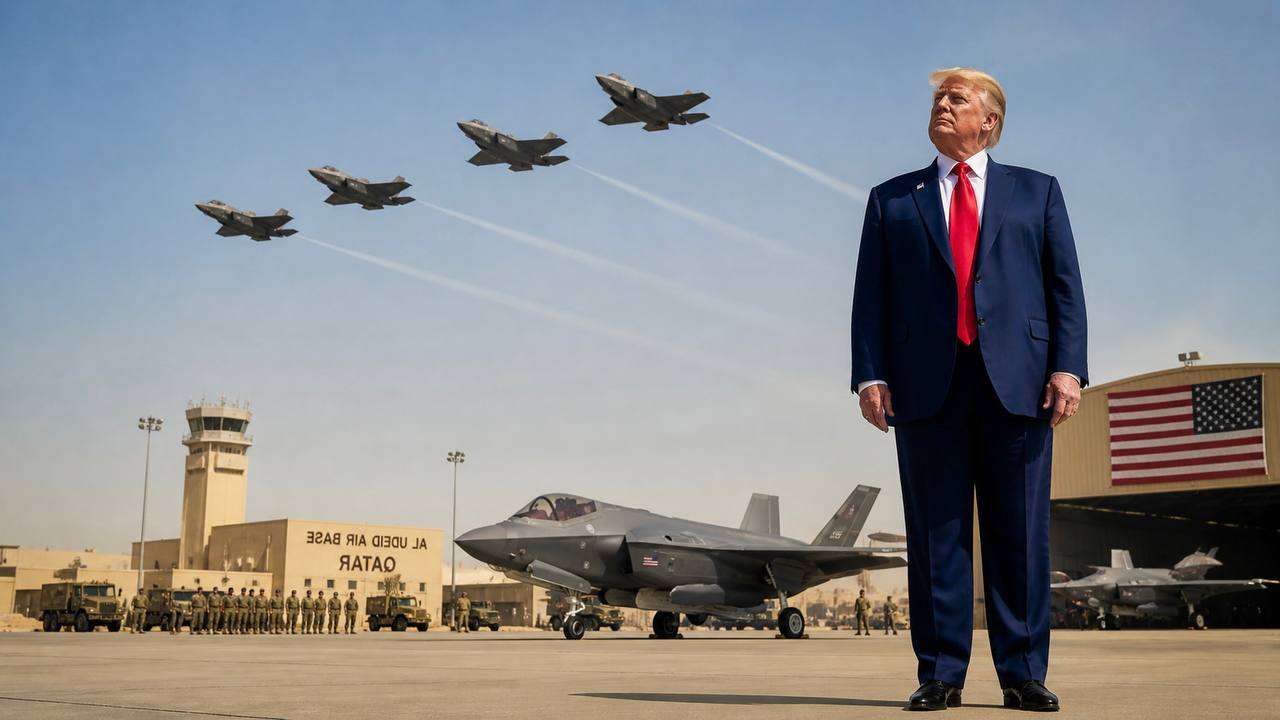

US President Donald Trump’s proposed ‘Project Freedom’ — a security framework for the Strait of Hormuz — targets the waterway through which 21 million barrels of oil transit every day, equal to 20% of global supply. India sources approximately 44-50% of its crude from the Middle East, with about 42-50% physically transiting the strait, leaving it materially exposed to any disruption at the chokepoint.
What the plan proposes
Statements cited by the US State Department and Pentagon describe ‘Project Freedom’ as a framework to neutralise threats to maritime navigation in the strait. The mechanism calls for expanded US military presence or a multinational naval coalition guaranteeing free passage for commercial vessels. Congress has not ratified the proposal, but it signals a harder US posture toward Iran, which controls a stretch of the northern coastline and has threatened to close the waterway during past standoffs.
Maritime security analysts warn the plan risks provoking Tehran rather than deterring it. Even a brief closure — or a spike in war-risk insurance premiums on Gulf-to-India tanker routes — would push up Brent crude benchmarks and raise costs for Indian refiners in Gujarat, Maharashtra, and Andhra Pradesh. State refiners IOC, BPCL, and HPCL hedge only partially; a sharp price move passes through to retail petrol, diesel, and LPG within weeks.
India’s energy exposure
The Ministry of Petroleum and Natural Gas had not issued a formal response by publication time. MEA did not respond by publication time. India’s crude import bill runs to roughly $100 billion annually. The International Energy Agency’s World Energy Outlook 2025 identifies the Hormuz chokepoint as a critical risk to energy security, warning that disruptions would cause severe supply stress across import-dependent Asian economies.
ℹ️ Why Hormuz matters to India
- India sources 44-50% of its crude from the Middle East, with 42-50% transiting the strait.
- OPEC suppliers Saudi Arabia, Iraq, Kuwait, and the UAE collectively anchor India’s crude basket — all route exports through Hormuz.
- A US-Iran naval standoff could simultaneously squeeze supply from multiple producers.
- War-risk insurance surcharges on Gulf-to-India corridors add a separate cost layer on top of crude price moves.
The Strait of Hormuz is a critical risk to energy security; disruptions would cause severe supply stress across import-dependent Asian economies.
International Energy Agency · IEA World Energy Outlook 2025 · 2025
What happens next
The Trump administration is expected to present a detailed operational blueprint for ‘Project Freedom’ to Gulf Cooperation Council partners by mid-May 2026. India’s Ministry of External Affairs and Ministry of Petroleum are expected to brief the Cabinet Committee on Economic Affairs in the same window. Analysts have warned of price increases if tensions escalate beyond diplomatic exchanges — a scenario that would add materially to India’s $100 billion annual import bill — though a specific per-barrel figure could not be verified from named institutions by publication time.
FAQ
What is Trump's 'Project Freedom'?
How would a Hormuz disruption affect Indian fuel prices?
What is India's official position?


