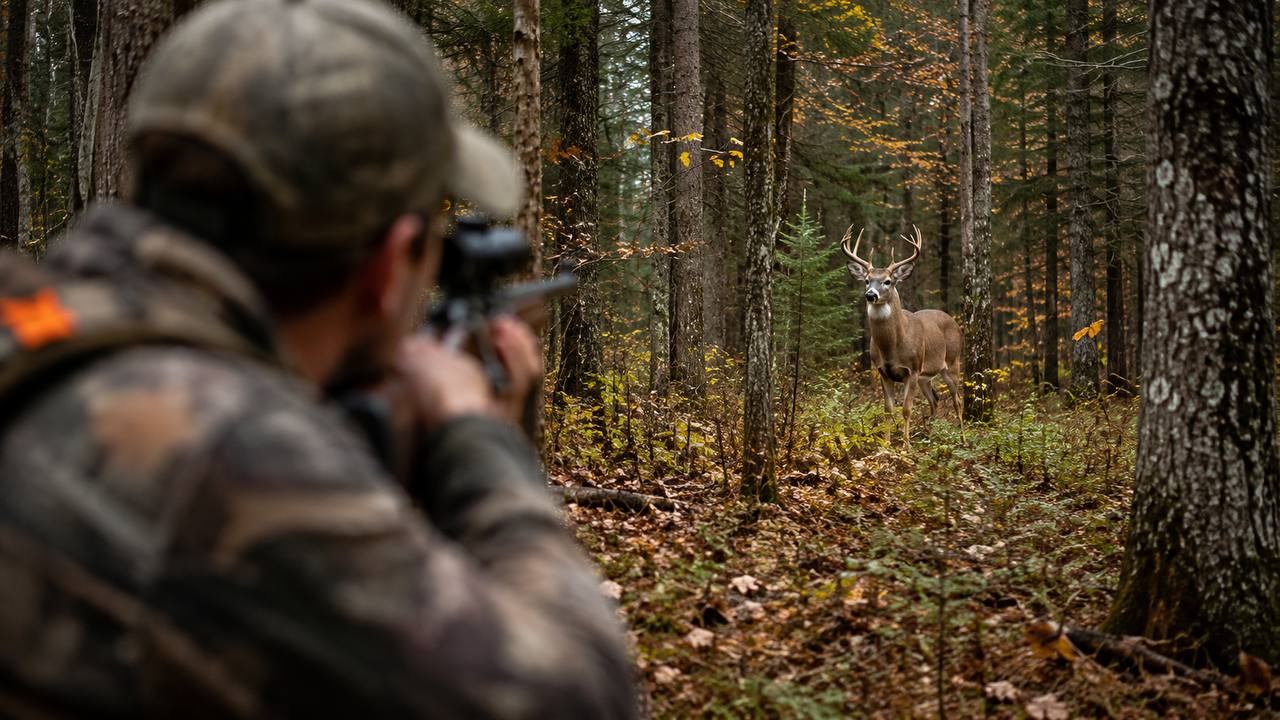

President Donald Trump has signed an executive order directing the Department of the Interior and the US Forest Service to expand hunting, trapping, and off-road vehicle access across more than 80 million acres of federally managed wilderness — the broadest rollback of public-land access rules since the Wilderness Act of 1964.
What changes
The order instructs land managers to treat hunting and fishing as default permitted uses rather than exceptions requiring individual approval. Previously, large wilderness sections barred motorised vehicles outright, and hunting was tied to permit quotas linked to conservation targets.
The directive also triggers a review of trapping rules. A 2020 regulation — introduced in the final weeks of Trump’s first term and retained by the Biden administration — banned trapping across all 63 national parks. Hunting lobbies had argued that ban undermined traditional wildlife management; those rules are now under formal reconsideration.
Biden-era restrictions introduced in 2023, which barred lead-ammunition hunting in certain migratory-bird corridors, are also under review under the new order.
“Hunting and fishing are not threats to our public lands — they are the backbone of conservation funding and a birthright of every American.”
Doug Burgum, US Secretary of the Interior · Department of the Interior statement · May 2026
Conservation opposition
The National Parks Conservation Association warned the order “opens the door to irreversible ecological damage” in habitats that took decades to recover. The group named the Greater Yellowstone Ecosystem and the Boundary Waters Canoe Area Wilderness in Minnesota as the areas most immediately exposed to expanded motorised access.
Critics also challenge the funding logic. The Land and Water Conservation Fund has channelled more than $23 billion into public land protection since 1965 — drawing primarily on oil and gas lease receipts, not hunting licence fees. The claim that hunters underwrite conservation, they argue, overstates the direct financial link.
ℹ️ Federal land management: key numbers
- The US federal government manages approximately 640 million acres — roughly 28% of total US land area.
- The Department of the Interior oversees national parks, wildlife refuges, and Bureau of Land Management territory.
- The US Forest Service, under the Department of Agriculture, manages 193 million acres, including most designated wilderness.
- Hunting is already legal on around 380 million federally managed acres; this order seeks to extend that footprint further.
Historical weight
The Wilderness Act of 1964 set the foundational standard: no mechanised transport, no permanent structures, minimal human imprint. Every administration since has either preserved or tightened that framework. Trump’s order is the first to direct agencies to systematically roll it back at scale — making it the most direct challenge to the 1964 baseline in six decades.
What happens next
The Department of the Interior has 90 days from the order’s signing to submit a unit-by-unit plan identifying specific rule changes across individual park and wilderness designations. Environmental groups have said they will file legal challenges in the 9th Circuit Court before that review period closes. First filings are expected by late July 2026.
FAQ
Does this order immediately allow hunting in all US national parks?
Which areas face the most immediate risk?
Can a future administration reverse this order?


