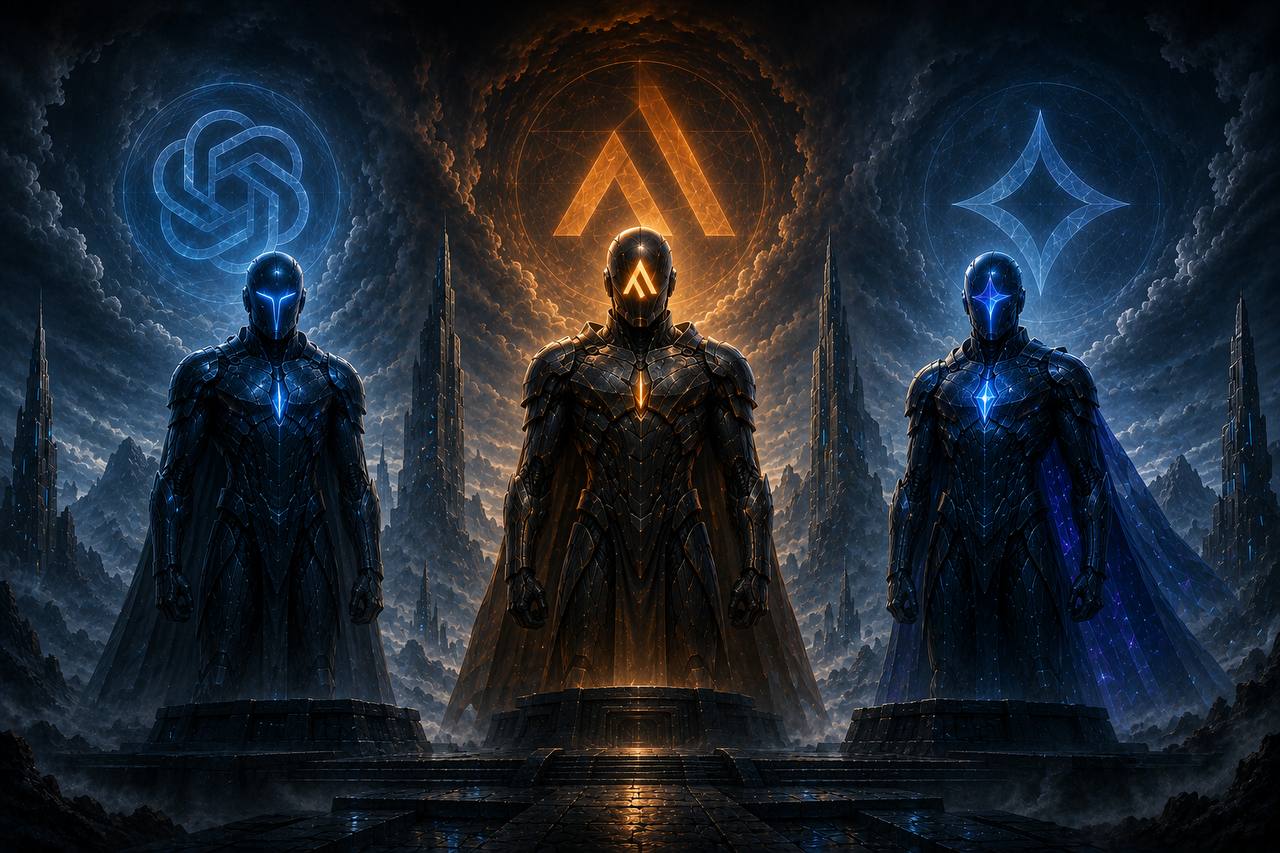

The AI race is moving at breakneck speed. As of late May 2026, the landscape is defined by major upgrades from Anthropic, OpenAI, and Google. Claude Opus 4.8 dropped just yesterday on May 28, bringing enhanced agentic workflows to its April predecessor. GPT-5.5 debuted in late April, and Gemini 3.1 Pro has been pushing the boundaries of scale since February.
Here is a straightforward, no-nonsense breakdown of how these three titans compare in real-world performance, core strengths, and ideal use cases.
RELEASE TIMELINE AND CORE POSITIONING
- Claude Opus 4.8 (Anthropic): Released May 28, 2026. This is a meaningful iteration over Opus 4.7, prioritizing self-verification, coding persistence, and long-running task reliability. Standout additions include Dynamic Workflows for managing swarms of sub-agents and a Fast mode that delivers results 2.5 times quicker and cheaper.
- GPT-5.5 (OpenAI): Released April 23, 2026. Billed as a new class of intelligence for real work, it features massive gains in computer interaction, agentic tool use, and structured professional output. It is available in Pro and Instant tiers.
- Gemini 3.1 Pro (Google): Released February 19, 2026. This model leans heavily into advanced reasoning, massive context windows, and native multimodality across text, video, audio, and images. Its superpower remains its seamless deep integration into the broader Google ecosystem.
Notably, all three models have pivoted heavily toward agentic AI, focusing on the ability to autonomously plan, execute multi-step tasks, utilize external tools, and and verify their own results.
BENCHMARK SNAPSHOT (LATE MAY 2026)
No single model sweeps every category; performance is highly task-dependent.
Coding and Software Engineering: Claude Opus 4.8 takes the lead, hitting approximately 69% on SWE-Bench Pro. It excels at tackling real GitHub issues, managing large refactors, and maintaining persistent workflows. GPT-5.5 remains highly competitive, especially in structured coding and terminal operations, while Gemini 3.1 Pro is solid but generally trails Claude in deep, long-horizon coding tasks.
Reasoning and Knowledge Work: Gemini 3.1 Pro frequently dominates in abstract reasoning and graduate-level science benchmarks. GPT-5.5 is often the top performer for general professional benchmarks and balanced knowledge work. Claude Opus 4.8 distinguishes itself through low hallucination rates, thoroughness, and consistency on extended tasks.
Multimodal and Long Context: Gemini 3.1 Pro is the undisputed leader here, offering native video and audio understanding alongside a context window exceeding one million tokens, making it ideal for massive datasets or media analysis. Claude and GPT-5.5 also offer strong one-million-token contexts with capable multimodal support, but Gemini’s implementation is noticeably more seamless.
Agentic and Tool Use: Claude shines with reliable, verifiable, long-running agents. GPT-5.5 leads in practical goal completion and computer use. Gemini effectively leverages deep search and Google’s ecosystem tools.
STRENGTHS AND WEAKNESSES
Strengths and Weaknesses of Leading AI Models
| Model | Pros | Cons |
|---|---|---|
| Claude Opus 4.8 | Unmatched coding reliability, high-quality natural prose, stellar instruction following, and powerful sub-agent orchestration. It is arguably the top choice for professional developers. | Premium pricing, and its multimodal capabilities are not as deeply native as Gemini’s. |
| GPT-5.5 | A versatile all-rounder backed by an excellent ecosystem. It offers strong structured outputs and balanced agentic capabilities, making it perfect for broad productivity, analysis, and research. | It can feel less specialized than its rivals in extreme coding environments or massive context scenarios. |
| Gemini 3.1 Pro | Unrivaled multimodality, massive context handling, and top-tier scientific reasoning. It is often the most cost-effective option, and Google Workspace integration is a massive advantage. | Outputs can occasionally feel more minimal or less polished than Claude’s, and it lacks the coding depth required for the most complex engineering tasks. |
PRICING OVERVIEW (APPROXIMATE, PER 1 MILLION TOKENS)
Approximate Pricing Overview (Per 1 Million Tokens)
| Model | Pricing Details |
|---|---|
| Claude Opus 4.8 | $5 input / $25 output for standard generation, though Fast mode offers better value. |
| GPT-5.5 | Consumer plans start around $20 per month, with API pricing ranging from $5 to $30 depending on the specific variant. |
| Gemini 3.1 Pro | Typically the most affordable for high-volume or multimodal workloads, supplemented by generous free and preview tiers within Google products. |
WHO SHOULD USE WHICH?
- Choose Claude Opus 4.8 for serious software engineering, agentic projects, legal or financial work, and whenever you need the most reliable, thoughtful outputs.
- Choose GPT-5.5 as your daily driver for general productivity, data work, and versatile agents, especially if you are already embedded in the OpenAI ecosystem. It is the best balanced choice for most people.
- Choose Gemini 3.1 Pro for multimodal media analysis, massive documents, scientific reasoning, or cost-effective, high-volume tasks, particularly if you rely heavily on Google apps.
ℹ️ Pro Strategy
Many power users run all three simultaneously using routing setups. A common approach is routing complex coding tasks to Claude, media analysis and massive files to Gemini, and general execution to GPT.
THE BIGGER PICTURE IN 2026
While the raw intelligence gap between frontier models is narrowing, specialization is increasing. Claude is the go-to for depth and reliability, Gemini for scale and multimodality, and GPT for versatility and polish. Agentic capabilities and workflow integrations are now far more critical than isolated benchmark scores.
Safety, pricing, and ecosystem lock-in will continue to drive adoption just as much as pure performance. Expect rapid updates, as the iteration cycle is moving faster than ever.
Bottom line — Test these models against your actual daily workflows. Benchmarks provide a helpful starting point, but real-world productivity is what ultimately wins the race. The 2026 AI frontier is not about crowning a single winner; it is about building the smartest hybrid systems.