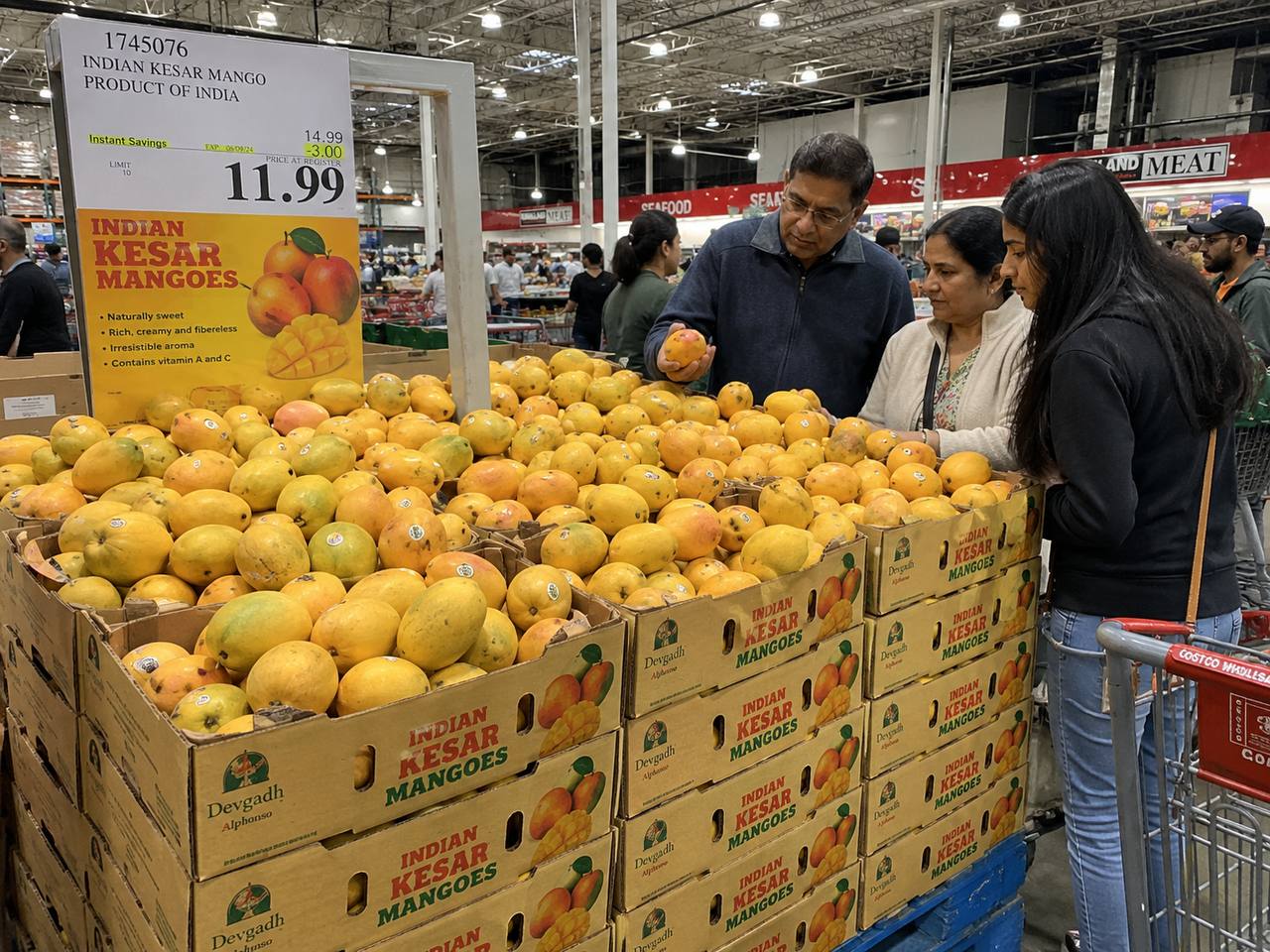

Summer in Seattle just got a lot sweeter. This past weekend, premium Kesar mangoes from Gujarat arrived on the shelves of local retailers, including Costco outlets in Kirkland and Redmond. A vibrant segment on Fox 13’s Good Day Seattle captured the growing buzz, featuring India’s Consul General Prakash Gupta as he introduced the fragrant, honey-rich fruit to Pacific Northwest viewers.
In India, the mango is revered as the “King of Fruits.” Premium varieties like the Alphonso, Kesar, Langda, and Chausa, are celebrated for their intense aroma, vibrant saffron flesh, and a luscious, fiber-free sweetness that captures the very essence of summer. For the Indian-American diaspora, biting into one is an evocative experience, bringing back vivid memories of childhood vacations, family gatherings, and street-side summer feasts.
ℹ️ Key Context: The Indian Mango Ban
Yet, this quintessential taste of home was missing from American tables for nearly 18 years. The U.S. banned Indian mangoes in 1989 due to phytosanitary concerns over pests like the mango seed weevil, and fruit flies. Consequently, the diaspora had to settle for local varieties or expensive imports that rarely matched the flavor of the authentic fruit.
A Presidential Boost
The geopolitical breakthrough came in 2006 during President George W. Bush’s state visit to India. While negotiating the landmark U.S.-India civil nuclear agreement with Prime Minister Manmohan Singh, President Bush was offered an Alphonso mango. His enthusiastic, candid verdict instantly made global headlines.
A hell of a fruit
President George W. Bush · During state visit to India · 2006
That light-hearted moment effectively greased the wheels of international diplomacy. In what became fondly known as the “mango-for-motorcycles” deal, the U.S. agreed to lift its import ban. In return, India eased trade restrictions on certain American goods, most notably Harley-Davidson motorcycles. By 2007, the first legal shipments of Indian mangoes reached U.S. soil, cleared through strict irradiation and USDA-approved pre-clearance protocols.
Mangoes in Seattle Now
Nearly two decades later, Indian mangoes remain a highly prized seasonal luxury in the United States. Air-freighted to ensure peak freshness, a box of 10 to 12 premium Kesar or Alphonso mangoes typically retails between $60 and $75 (₹4,800 to ₹6,200). While they routinely fly off the shelves at specialty Indian grocery stores, they are now making more frequent appearances at mainstream retail giants like Costco.
The Indian Consulate in Seattle has been instrumental in expanding this market access. Consul General Gupta’s team has actively organized local tastings and retailer partnerships to build momentum for the current Kesar season. The recent Fox 13 feature even shared practical culinary tips, demonstrating how easily the fruit can be integrated into daily menus—whether blended into traditional lassis, tossed into fresh salsas, or simply savored, on its own.
For the Pacific Northwest’s Indian community, the fruit represents a powerful wave of nostalgia. For curious locals, it offers a delicious introduction to what enthusiasts consider the finest fruit in the world.
A Tasty Bridge Between Nations
Mango diplomacy has a storied history in India, where the fruit has long served as a traditional symbol of goodwill. In the context of U.S.-India relations, it successfully transformed a rigid trade dispute into a warm cultural connection. What began as a complex bilateral negotiation now ends with juicy mangoes landing in American shopping carts every summer.
As the season unfolds, Seattle residents have a prime opportunity to experience the phenomenon firsthand. Whether you are reliving fond memories or tasting an authentic Indian mango for the very first time, President Bush’s decades-old assessment still holds true: it really is one hell of a fruit.

