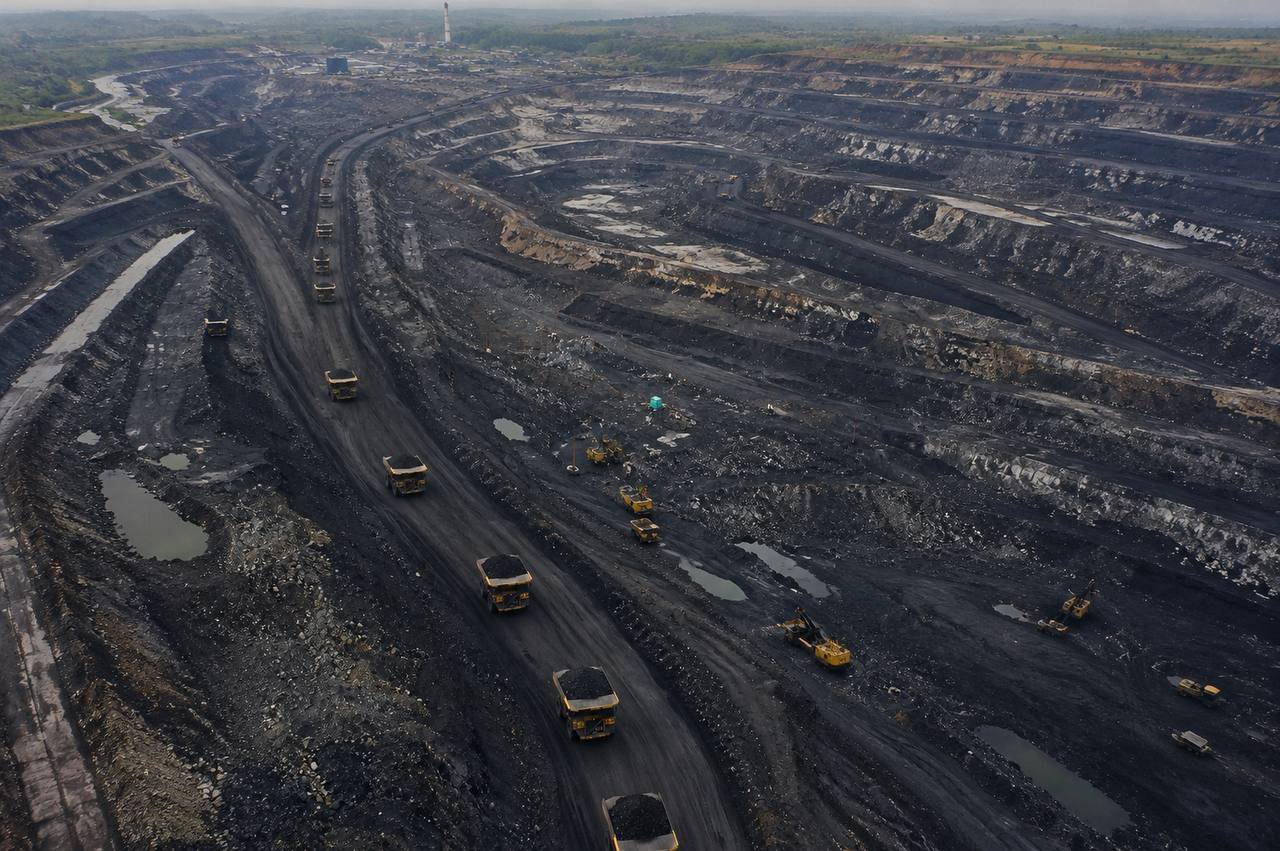

India has officially cemented its position as a global energy powerhouse, recently emerging as the world’s second-largest producer and consumer of coal. Marking a historic milestone, domestic coal production crossed the monumental one-billion-tonne mark, effectively ending the era of severe fuel shortages. Announcing this achievement, Union Minister for Coal and Mines G. Kishan Reddy emphasized that major reforms over the past decade have transformed the sector, securing the country’s immediate power needs and supporting millions of jobs.
However, the minister also outlined a crucial pivot: instead of just burning this massive domestic resource, the government is prioritizing a massive push toward surface coal gasification. Backed by a recently approved ₹37,500 crore incentive scheme, the goal is to attract ₹4 lakh crore in investments to convert solid coal into versatile syngas. This transition aims to save an estimated ₹3 lakh crore in foreign exchange and build a stronger, more resilient supply chain. It is not just an environmental imperative; it is a strategic necessity to secure India’s long-term economic and energy sovereignty against global supply shocks.
The Paradox of Plenty: India’s Coal Profile
To understand why this shift to gasification is so critical, one must first look at the paradox of India’s coal reserves. India sits comfortably on over 400 billion tonnes of coal, ranking as the fifth-largest reserve globally. Yet, the central challenge has never been the sheer volume of the resource, but rather its underlying quality.
Indian coal is predominantly thermal grade and is infamous within the global energy industry for its exceptionally high ash content, which can routinely reach up to 40 per cent. In stark contrast to the premium, low-ash coal mined in regions like Australia or the United States, Indian coal also suffers from a significantly lower gross calorific value—meaning it produces less heat per tonne—and contains higher levels of moisture. This high ash burden means that when the coal is utilized, nearly half of the extracted volume turns into abrasive, non-combustible waste. Consequently, standard, off-the-shelf processing technologies used successfully in other parts of the world cannot simply be plugged into the Indian ecosystem; they quickly clog, degrade, or fail entirely when fed this domestic feedstock.
Molecules Over Electrons: Bypassing the Ash Barrier
This unique geological profile demands an equally unique technological response. For decades, the default mechanism for utilizing this coal has been direct combustion in thermal power plants. While this generates the electricity (electrons) needed to power the nation, it also releases heavy emissions, volatile organic compounds, and massive amounts of particulate matter.
Coal gasification offers a radically different paradigm. Instead of simply setting the coal on fire, gasification breaks the solid fuel down at a fundamental molecular level. By exposing the coal to extreme heat, intense pressure, and steam, alongside a strictly limited and controlled amount of oxygen, the carbon molecules are coerced into a chemical reaction rather than combustion. The end result of this highly controlled environment is the production of synthesis gas, commonly known as syngas. Syngas is an incredibly versatile, high-value mixture comprised primarily of carbon monoxide and hydrogen, serving as a foundational building block for a myriad of industrial applications.
Processing India’s high-ash coal into pure syngas, however, requires specialized infrastructural adaptations. Because standard moving-bed or entrained-flow gasifiers are easily choked by the 40 per cent ash content, Indian facilities must rely on advanced fluidized-bed gasification technologies. In a fluidized-bed gasifier, a pressurized upward flow of steam and oxygen suspends the crushed coal particles in mid-air, making the solid fuel behave as if it were a boiling liquid. This dynamic suspension is critical: it efficiently lifts the reactive carbon out of the heavy ash, allowing the necessary gasification reactions to occur rapidly and uniformly. Meanwhile, the heavy, non-combustible ash agglomerates and falls away safely to the bottom without clogging the internal mechanisms.
A Geopolitical Shield Against Energy Shocks
The mastery of coal gasification is not merely an engineering triumph; it is a vital geopolitical shield. While the rapid expansion of renewable energy sources like solar and wind provides electricity, massive and critical sectors of the Indian economy run exclusively on molecules. Agriculture, heavy manufacturing, ceramics, and petrochemicals rely fundamentally on chemical building blocks.
Currently, India’s dependence on foreign markets for these chemical inputs is a severe strategic vulnerability. The country imports:
This heavy reliance means that any disruption in the global supply chain—be it a shipping lane blockade in the Middle East, sudden geopolitical conflicts, or volatile international currency fluctuations—instantly triggers a wave of inflation across the domestic economy, hiking the cost of food production and industrial manufacturing overnight.
By investing heavily in coal gasification infrastructure, India is actively building a firewall against these global energy shocks. The syngas produced from domestic coal can be further processed into synthetic natural gas (SNG), as well as vital chemicals like urea, ammonia, and methanol. By substituting expensive, imported LNG and foreign fertilizers with domestic, coal-derived alternatives, the nation effectively insulates its core industries from external volatility. Ultimately, transforming an inherently flawed, high-ash raw material into the sophisticated chemical bedrock of a modern economy ensures that India’s vast coal reserves do not just keep the lights on today, but actively secure the nation’s economic independence and geopolitical stability for decades to come.